

When buying a property in the UK, one of the most important costs to consider is Stamp Duty Land Tax (SDLT). This is a government tax paid when purchasing property or land above a certain value in England and Northern Ireland.
In Scotland and Wales, similar property taxes apply, but they operate under different names and rates.
This guide explains everything you need to know about Stamp Duty in 2025, including current SDLT rates, first-time buyer relief, second home surcharges, and how the tax is calculated. Whether you’re buying your first home, moving house, or investing in property, understanding Stamp Duty can help you plan your budget more effectively.
Why Do You Need to Pay Stamp Duty?
When you purchase a property or land, the ownership must legally transfer through HM Land Registry. Before this transfer is completed, HMRC requires confirmation that any Stamp Duty owed has been paid.
Your solicitor or conveyancer usually handles this process on your behalf, including:
- Filing the SDLT return
- Paying the tax to HMRC
- Obtaining the SDLT5 certificate needed for registration
Without this certificate, the property ownership cannot be fully registered.
Stamp Duty Rates in England and Northern Ireland 2026
The amount of Stamp Duty you pay depends on several factors, including:
- The property purchase price
- Whether you’re a first-time buyer
- If the property is a second home or buy-to-let investment
- Your UK residency status
- Any exemptions or reliefs you may qualify for
SDLT is calculated in bands, meaning you only pay the relevant rate on each portion of the property price.
Standard Residential Stamp Duty Rates 2026
For standard residential property purchases in England and Northern Ireland, the following SDLT rates apply from 1 April 2025:
| Property Price | SDLT Rate |
|---|---|
| Up to £125,000 | 0% |
| £125,001 – £250,000 | 2% |
| £250,001 – £925,000 | 5% |
| £925,001 – £1,500,000 | 10% |
| Over £1,500,000 | 12% |
Example of Stamp Duty Calculation
If you buy a property for £295,000, your SDLT would be calculated as follows:
- 0% on the first £125,000 = £0
- 2% on the next £125,000 = £2,500
- 5% on the remaining £45,000 = £2,250
Total Stamp Duty = £4,750
Stamp Duty for First-Time Buyers
First-time buyers in England and Northern Ireland may qualify for Stamp Duty relief when purchasing their first home.
To qualify, you must:
- Be purchasing your only or main residence
- Never have owned property anywhere in the world
From 1 April 2025, first-time buyer relief applies to properties worth up to £500,000.
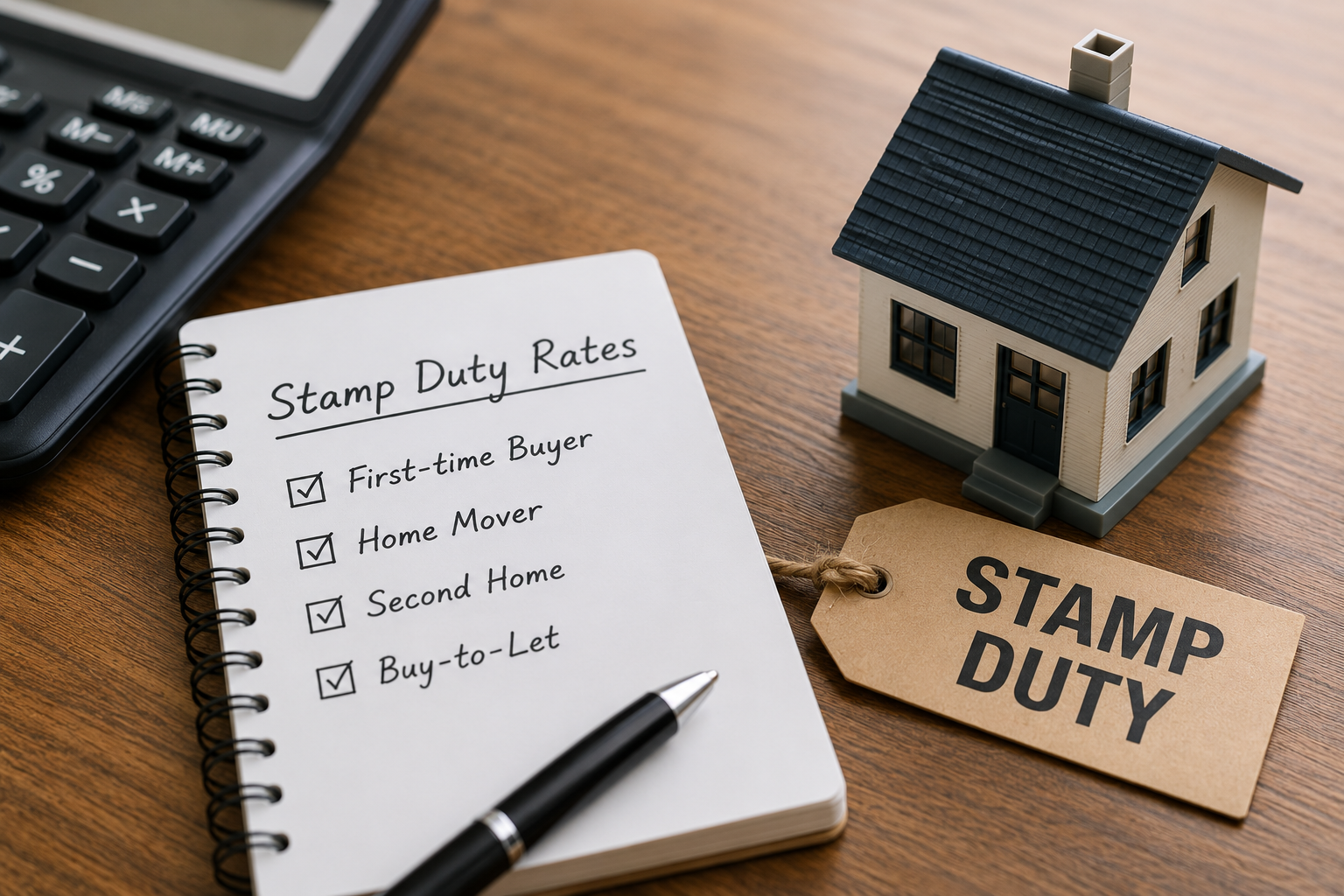
First-Time Buyer Stamp Duty Rates

| Property Price | SDLT Rate |
|---|---|
| Up to £300,000 | 0% |
| £300,001 – £500,000 | 5% |
If the property price exceeds £500,000, standard SDLT rates apply instead.
First-Time Buyer Example
If a first-time buyer purchases a home for £400,000, the SDLT would be:
- 0% on the first £300,000 = £0
- 5% on the remaining £100,000 = £5,000
Total Stamp Duty = £5,000
Stamp Duty on Second Homes and Buy-to-Let Properties
If you are purchasing an additional residential property worth £40,000 or more, such as a second home or buy-to-let investment, higher SDLT rates apply.
A 5% surcharge is added on top of the standard rates.
Additional Property SDLT Rates 2026
| Property Price | Additional Property Rate |
|---|---|
| Up to £125,000 | 5% |
| £125,001 – £250,000 | 7% |
| £250,001 – £925,000 | 10% |
| £925,001 – £1,500,000 | 15% |
| Over £1,500,000 | 17% |
Example for Second Homes
If you purchase a second property for £300,000, the SDLT would be:
- 5% on the first £125,000 = £6,250
- 7% on the next £125,000 = £8,750
- 10% on the remaining £50,000 = £5,000
Total Stamp Duty = £20,000
Non-Resident Stamp Duty Surcharge
Non-UK residents purchasing residential property in England or Northern Ireland are generally required to pay an additional 2% SDLT surcharge on top of existing rates.
This applies to overseas buyers investing in UK property or purchasing homes while living abroad.
Land and Buildings Transaction Tax (LBTT) in Scotland
In Scotland, buyers pay Land and Buildings Transaction Tax (LBTT) instead of Stamp Duty.
Standard LBTT Rates
| Property Price | LBTT Rate |
|---|---|
| Up to £145,000 | 0% |
| £145,001 – £250,000 | 2% |
| £250,001 – £325,000 | 5% |
| £325,001 – £750,000 | 10% |
| Over £750,000 | 12% |
First-Time Buyer Relief in Scotland
First-time buyers in Scotland benefit from a higher tax-free threshold of £175,000, compared to £145,000 for standard buyers.
Additional Dwelling Supplement (ADS)
An Additional Dwelling Supplement (ADS) of 8% applies when purchasing an additional residential property in Scotland.
This rate increased from 6% to 8% on 5 December 2024.
Land Transaction Tax (LTT) in Wales
In Wales, buyers pay Land Transaction Tax (LTT) instead of Stamp Duty.
Main Residential LTT Rates
| Property Price | LTT Rate |
|---|---|
| Up to £225,000 | 0% |
| £225,001 – £400,000 | 6% |
| £400,001 – £750,000 | 7.5% |
| £750,001 – £1,500,000 | 10% |
| Over £1,500,000 | 12% |
Higher Rates for Additional Properties in Wales
Wales also applies higher tax rates when buying additional properties, including second homes and buy-to-let investments.
These rates increased by 1% across all bands from 11 December 2024.
Final Thoughts on Stamp Duty in 2026
Understanding Stamp Duty Land Tax is essential when budgeting for your property purchase. Whether you are a first-time buyer, home mover, landlord, or overseas investor, knowing the latest SDLT rates and reliefs can help you avoid unexpected costs.
Before purchasing a property, it’s always worth speaking with a solicitor, conveyancer, or mortgage adviser to fully understand your tax obligations and available exemptions.
If you’re planning to buy a home in 2025, make sure to factor Stamp Duty into your overall moving costs to ensure a smoother home buying experience.