


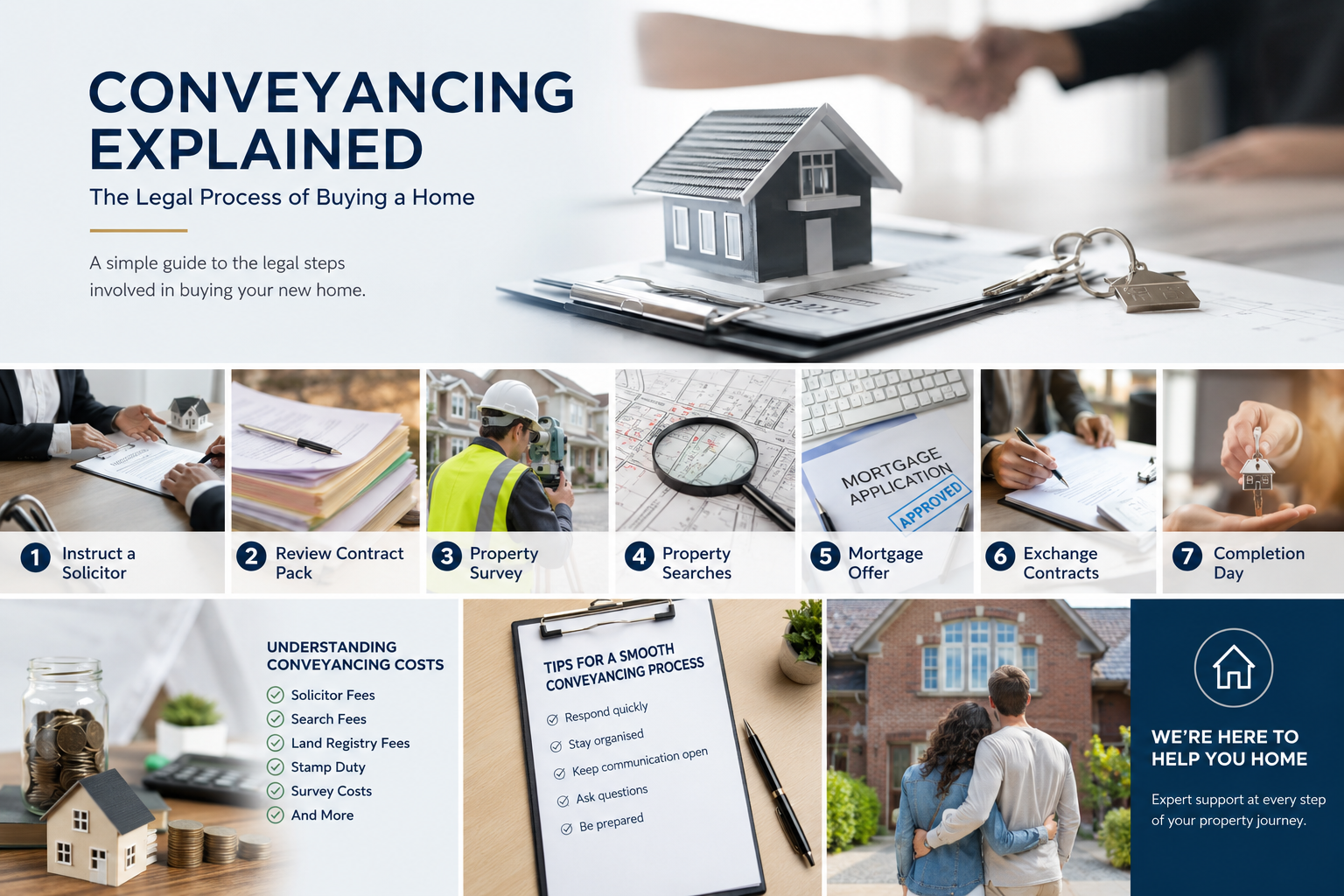
Buying a home is an exciting milestone, but before you receive the keys to your new property, there are several important legal steps that must be completed. This process is known as conveyancing.
Our guide explains each stage of the conveyancing process, helping you understand what to expect from the moment your offer is accepted through to completion day.
What Is Conveyancing?
Conveyancing is the legal process of transferring ownership of a property from the seller to the buyer. The process begins once your offer on a property has been accepted and ends when the property is officially registered in your name.
During this time, your solicitor or licensed conveyancer manages all legal aspects of the purchase, including:
- Reviewing contracts
- Carrying out property searches
- Handling mortgage paperwork
- Managing payments and fund transfers
- Registering ownership with the Land Registry
The purpose of conveyancing is to ensure there are no legal or financial issues linked to the property before ownership changes hands.
How Long Does Conveyancing Take?
The conveyancing process usually takes between 8 and 16 weeks, although timescales can vary depending on the type of property and the complexity of the transaction.
Straightforward purchases, such as freehold homes with no onward chain, are often completed more quickly.
Several factors can affect the timeline, including:
- Whether the property is freehold or leasehold
- Delays with mortgage approval
- Issues identified during searches or surveys
- Communication between solicitors and estate agents
- Property chains involving multiple buyers and sellers
- Market demand and solicitor workload
Understanding these factors can help you prepare for the process and manage expectations.

The Main Stages of the Conveyancing Process
1. Instructing a Solicitor or Conveyancer
Once your offer has been accepted, the first step is to appoint a solicitor or licensed conveyancer to handle the legal side of your purchase.
Although estate agents may recommend a firm, it’s always worth comparing a few options before making a decision. Choosing an experienced and responsive professional can make the process far less stressful.
When selecting a solicitor or conveyancer, consider:
- Their experience with similar property types
- Communication methods and response times
- Transparent pricing and fees
- Reviews and recommendations
If you are buying a new-build property or leasehold home, it can be beneficial to choose a specialist with experience in these areas.
Solicitor vs Conveyancer – What’s the Difference?
Both solicitors and licensed conveyancers are qualified to manage property transactions.
Solicitors are trained across multiple areas of law and may be better suited to more complex purchases involving disputes or legal complications.
Conveyancers specialise specifically in property law and are often a more cost-effective option for straightforward transactions.
Do You Need a Solicitor or Conveyancer?
While it is possible to manage conveyancing yourself, most buyers use a professional, and many mortgage lenders require it.
A solicitor or conveyancer will:
- Handle legal paperwork
- Carry out property searches
- Communicate with the seller’s solicitor
- Manage payments and deadlines
- Register the property in your name
- Provide legal guidance throughout the process
2. Reviewing the Contract Pack
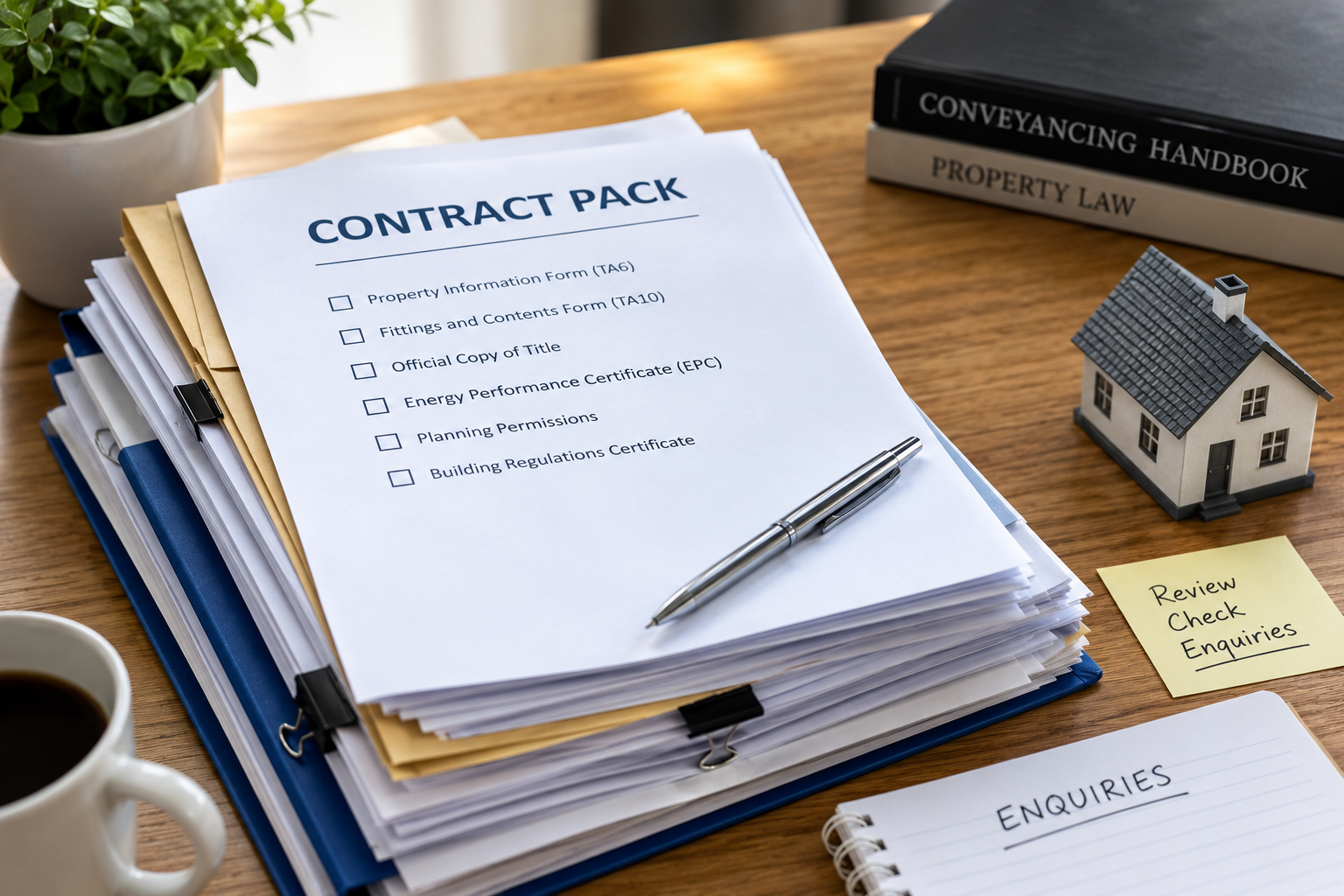
After the sale is agreed, the seller’s solicitor prepares a draft contract pack containing key information about the property.
Your solicitor will review all documents carefully, including:
- Property Information Form (TA6)
- Fittings and Contents Form (TA10)
- Land Registry title documents
- Energy Performance Certificate (EPC)
- Planning permissions and building regulation certificates
Your solicitor will raise enquiries if any details need clarification or further investigation.
This stage ensures you fully understand the property and any legal obligations before proceeding.
3. Arranging a Property Survey
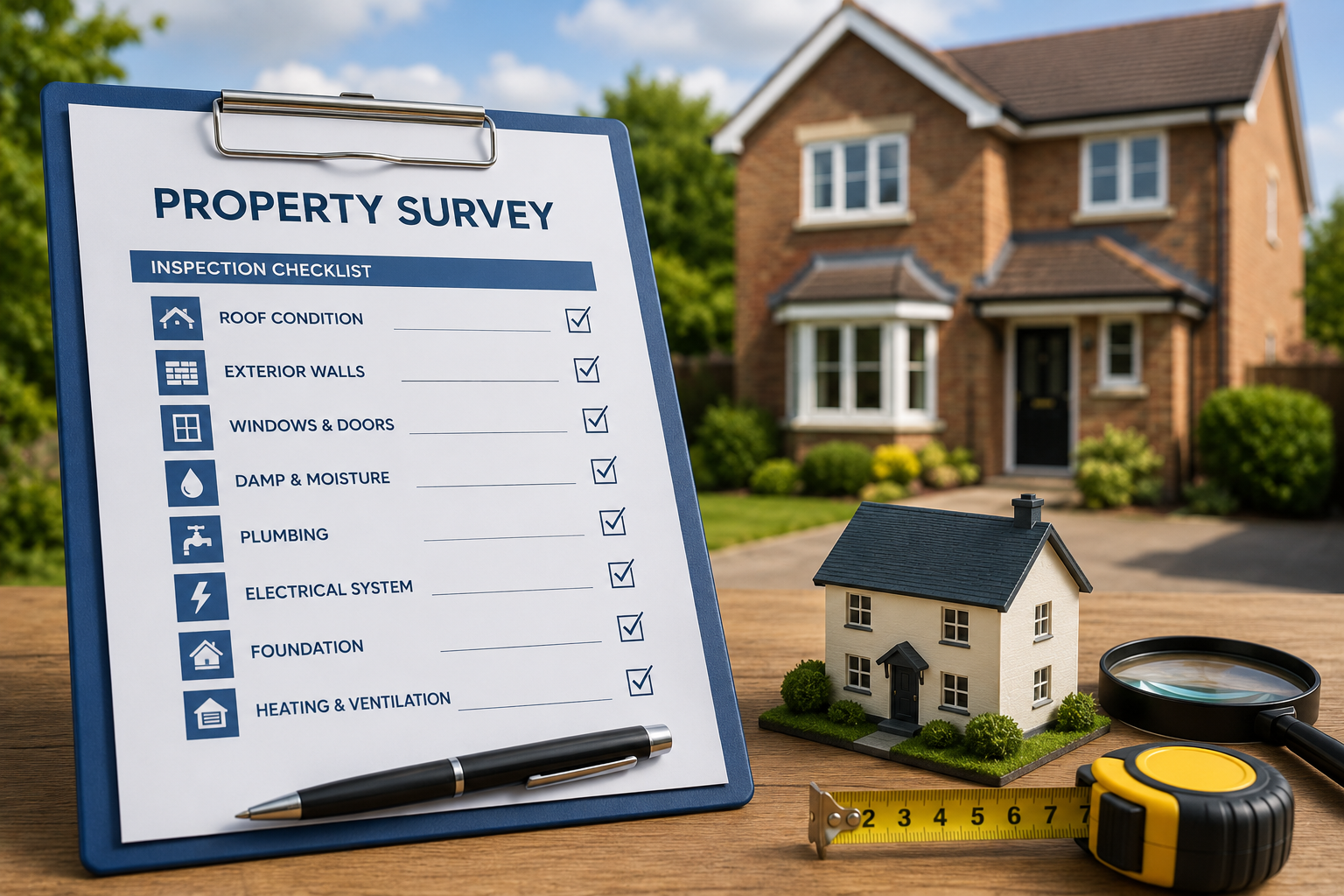
Although surveys are separate from the legal conveyancing process, they are highly recommended when buying a property.
A survey helps identify potential issues such as:
- Structural movement
- Damp problems
- Roof defects
- Subsidence
- Urgent repairs
The best time to arrange a survey is after your offer has been accepted but before contracts are exchanged.
If significant problems are discovered, you may choose to renegotiate the price or ask the seller to carry out repairs before completion.
4. Conducting Property Searches
Your solicitor will carry out a series of legal searches to uncover any issues that could affect the property or surrounding area.
Common Property Searches Include:
Land Registry Search
Confirms legal ownership and checks for restrictions or financial charges on the property.
Local Authority Search
Reveals planning applications, road schemes, conservation areas and nearby developments.
Environmental Search
Identifies risks such as flooding, land contamination or ground instability.
Water and Drainage Search
Confirms whether the property is connected to mains water and drainage systems.
Additional Searches
Depending on the location of the property, further searches may be recommended, including:
- Mining searches
- Chancel repair liability searches
- Railway and infrastructure searches
Your solicitor will advise which searches are appropriate for your purchase.
5. Securing Your Mortgage Offer
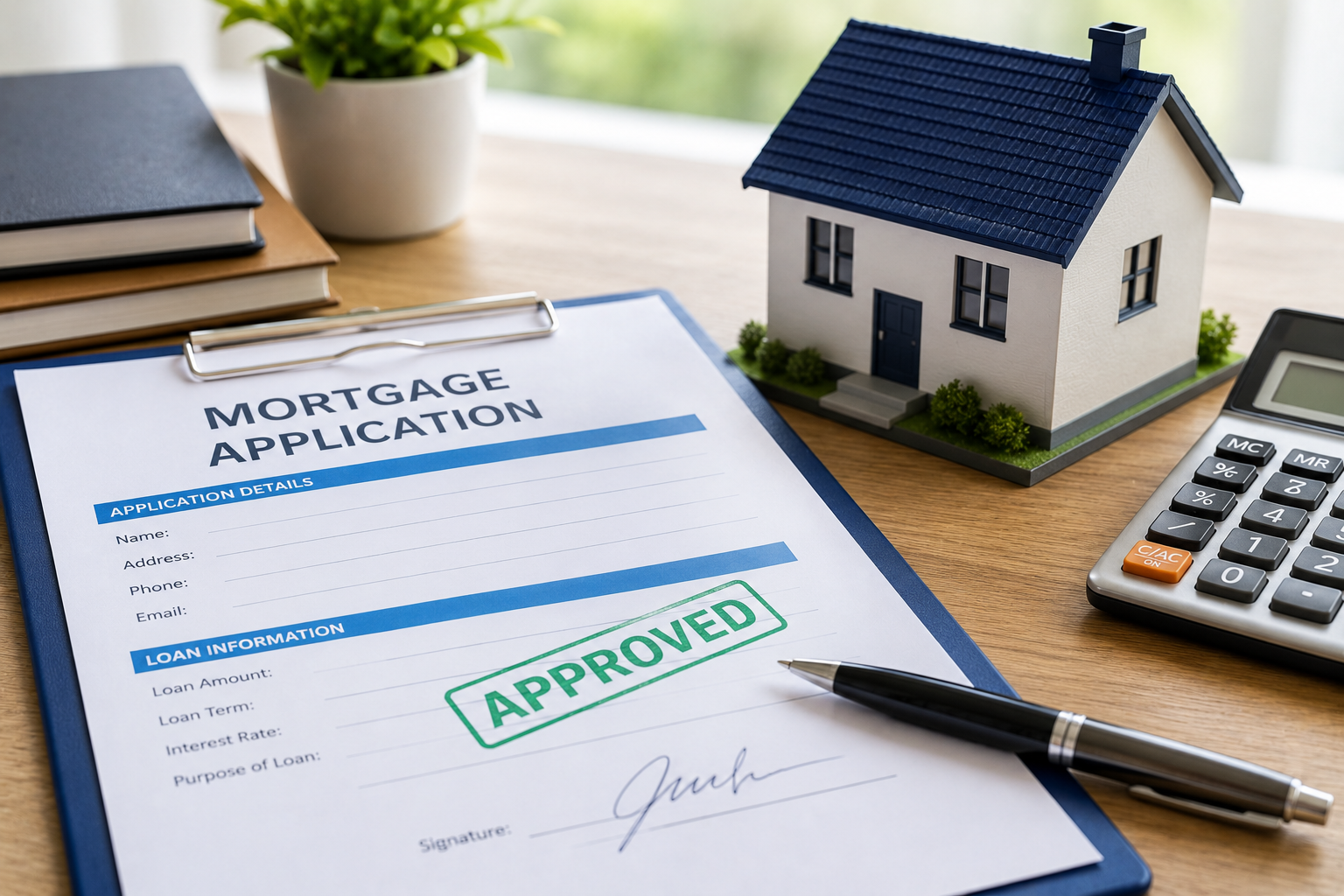
While legal work is underway, your mortgage lender will process your application and arrange a valuation of the property.
A mortgage valuation confirms the property is worth the amount being borrowed. However, it does not assess the property’s condition or identify legal issues.
Once approved, your lender will issue a formal mortgage offer outlining:
- Loan amount
- Interest rate
- Mortgage conditions
- Repayment terms
Your solicitor will review the offer before moving forward.
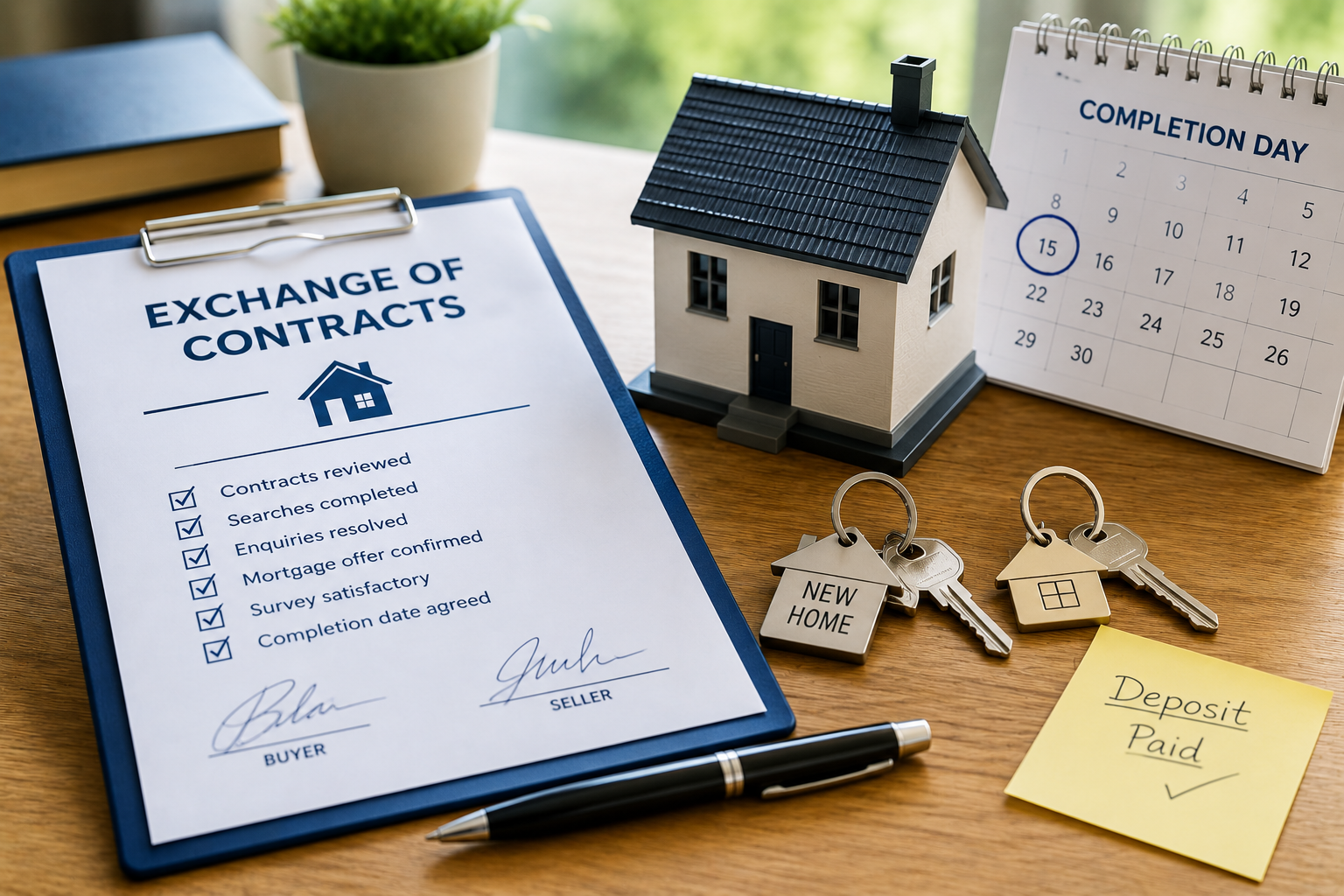
6. Signing and Exchanging Contracts
You will be ready to sign contracts once:
- All searches and enquiries are complete
- Your mortgage offer is confirmed
- Surveys are satisfactory
- A completion date has been agreed
Exchange of Contracts
Once both parties sign and exchange contracts, the transaction becomes legally binding.
At this stage:
- You pay your deposit (usually 10%)
- A fixed completion date is agreed
- Neither party can withdraw without financial penalties
Between Exchange and Completion
Your solicitor will:
- Request mortgage funds
- Prepare transfer documents
- Carry out final legal checks
- Arrange secure transfer of funds
Meanwhile, you should:
- Arrange buildings insurance
- Prepare for your move
- Sign final documents
- Ensure remaining funds are available
- Notify utility providers of your moving date
7. Completion Day
Completion day is when ownership officially transfers to you.
Your solicitor sends the remaining balance to the seller’s solicitor, and once funds are received, you can collect the keys to your new home.
Congratulations — the property is now legally yours.
What Happens After Completion?
After completion, your solicitor will finalise the remaining legal formalities, including:
- Paying any Stamp Duty owed
- Registering the property with the Land Registry
- Providing confirmation of ownership
- Sending you copies of important legal documents
Understanding Conveyancing Costs
Conveyancing costs typically include your solicitor’s legal fees as well as additional expenses known as disbursements.
Common Costs Include:
- Solicitor or conveyancer fees
- Property search fees
- Land Registry fees
- Stamp Duty
- Survey costs
- Bank transfer charges
- ID verification fees
Always ask for a detailed quote so you understand exactly what is included.
Tips for a Smooth Conveyancing Process
Although some delays are unavoidable, these simple steps can help keep your purchase moving smoothly:
- Respond quickly to requests from your solicitor
- Keep your mortgage application progressing
- Stay organised with documents and paperwork
- Ask questions if anything is unclear
- Maintain regular communication with all parties involved
Need Help With Conveyancing?
Whether you’re buying your first home, moving property or investing in real estate, understanding the conveyancing process can help make your purchase smoother and less stressful.
Our experienced team is here to guide you through every stage of your property journey with clear advice and professional support.