


Buying a home is one of the most important financial decisions you’ll ever make. Whether you’re a first-time buyer, moving to a larger property, or purchasing a new-build home, understanding the home buying process can make your journey easier and less stressful.
From arranging your mortgage to collecting the keys on completion day, this guide explains everything you need to know about buying a home in the UK.
Understanding the Home Buying Process
Buying a property in the UK involves several important stages. While every purchase is slightly different, the overall process usually follows the same structure.
The journey typically includes:
- Organising your finances and deposit
- Getting a Mortgage in Principle
- Searching for your ideal property
- Making an offer or reserving a new-build home
- Completing surveys and legal checks
- Exchanging contracts
- Completing the purchase and moving in
Understanding each stage can help you avoid delays and feel more confident throughout the process.
How Long Does It Take to Buy a House?
The average home buying process in the UK usually takes between 12 and 16 weeks from offer acceptance to completion. However, timelines can vary depending on the property type, mortgage approval, legal work, and whether there is a property chain involved.
Chain-free purchases, such as many new-build homes, often move more quickly because there are fewer delays from other buyers or sellers.
Factors that may affect your timeline include:
- Mortgage approval speed
- Property surveys and searches
- Solicitor response times
- Issues discovered during legal checks
- The length of the property chain
Being organised and responding quickly to requests from lenders and solicitors can help speed up the process.
Key Stages of Buying a Home in the UK
1. Arrange a Mortgage in Principle
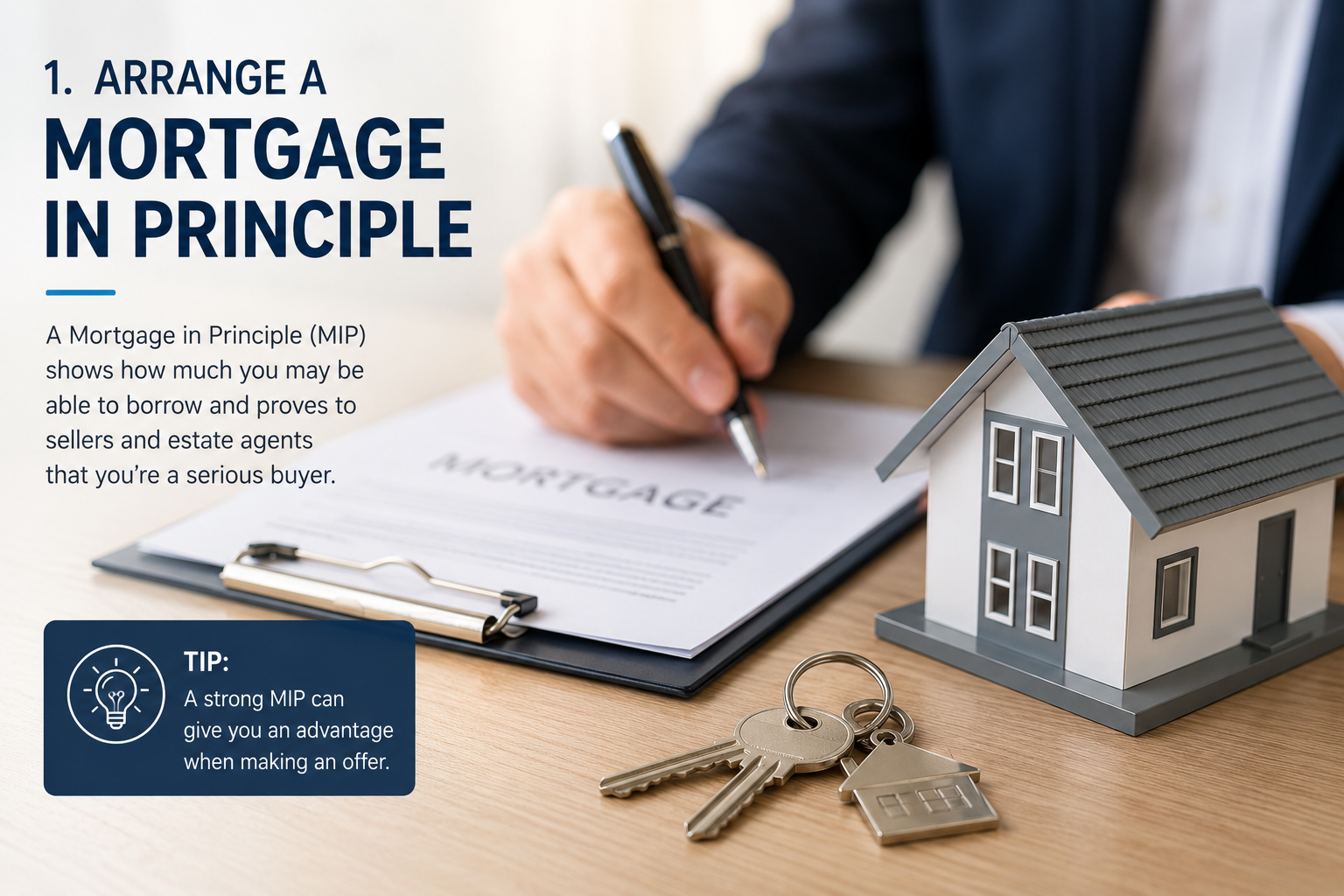
Before viewing properties, many buyers arrange a Mortgage in Principle (MIP). This shows estate agents and sellers how much you may be able to borrow and confirms you’re a serious buyer.
2. Find Your Ideal Property

Once your budget is confirmed, you can start searching for homes in your preferred location.
If you’re buying a new-build property, you may reserve the home directly with the developer. Existing homes are usually purchased through estate agents after an offer is accepted.
3. Instruct a Solicitor and Arrange Surveys
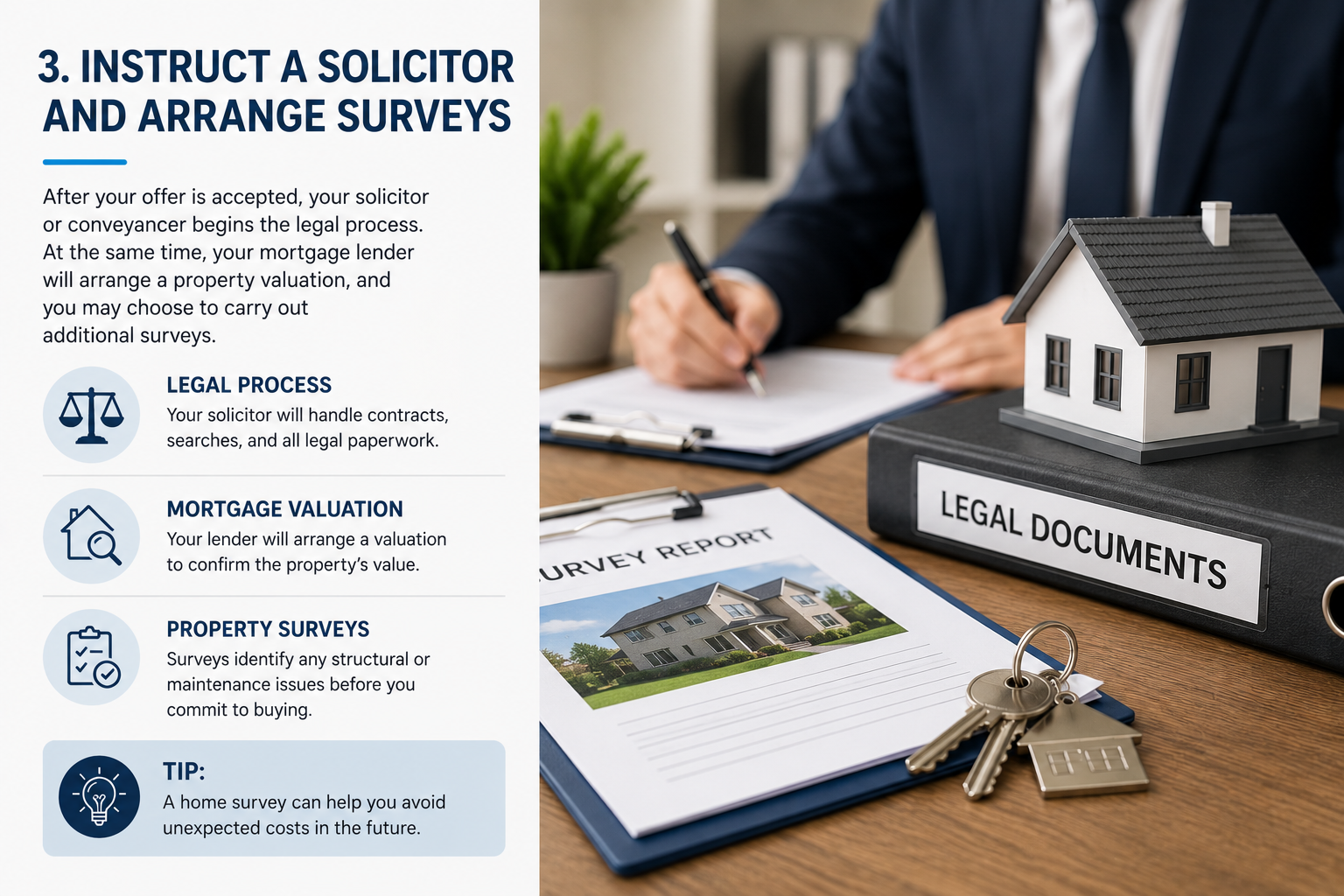
After your offer is accepted, your solicitor or conveyancer begins the legal process. At the same time, your mortgage lender will arrange a property valuation, and you may choose to carry out additional surveys.
4. Exchange Contracts
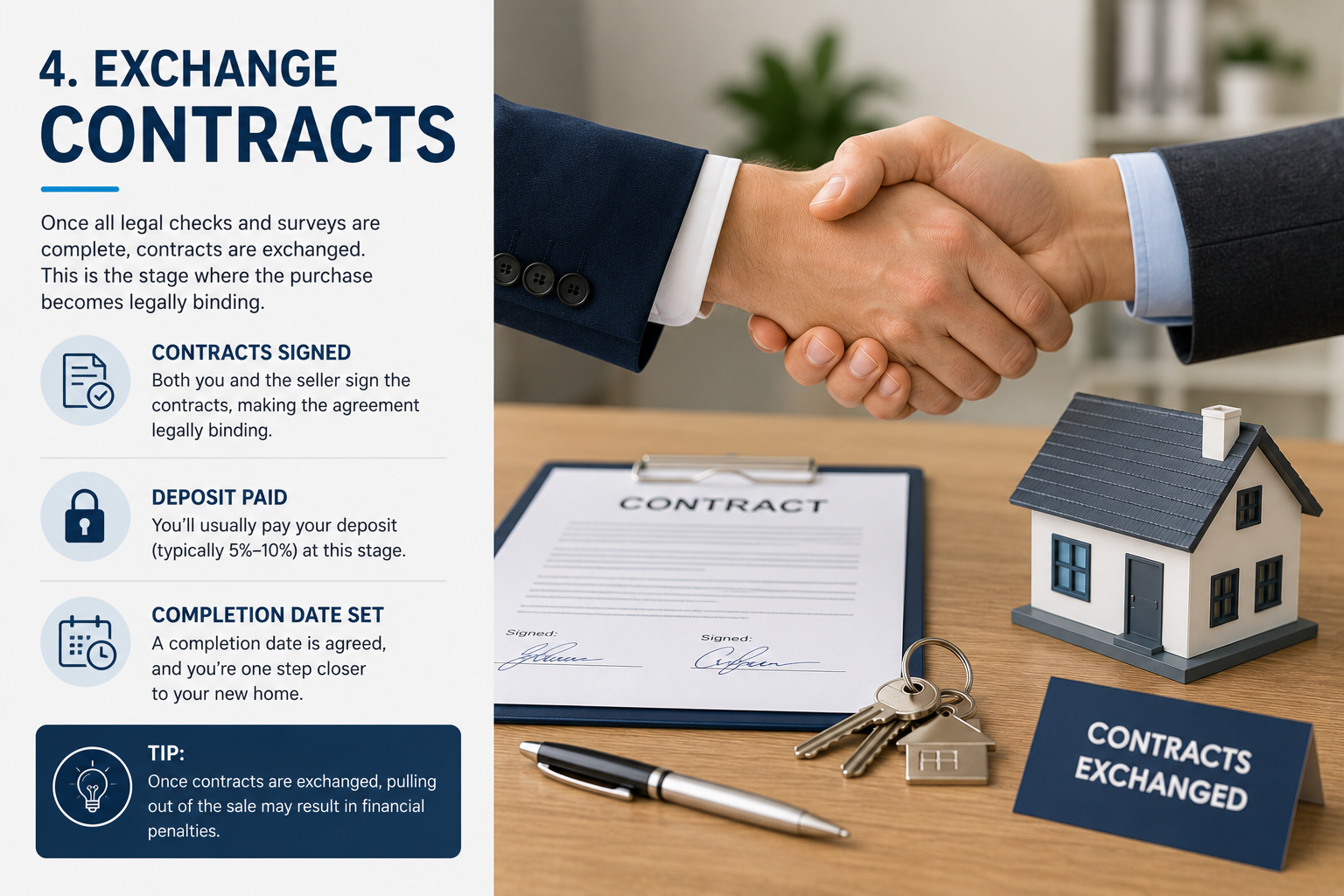
Once all legal checks and surveys are complete, contracts are exchanged. This is the stage where the purchase becomes legally binding.
5. Completion Day
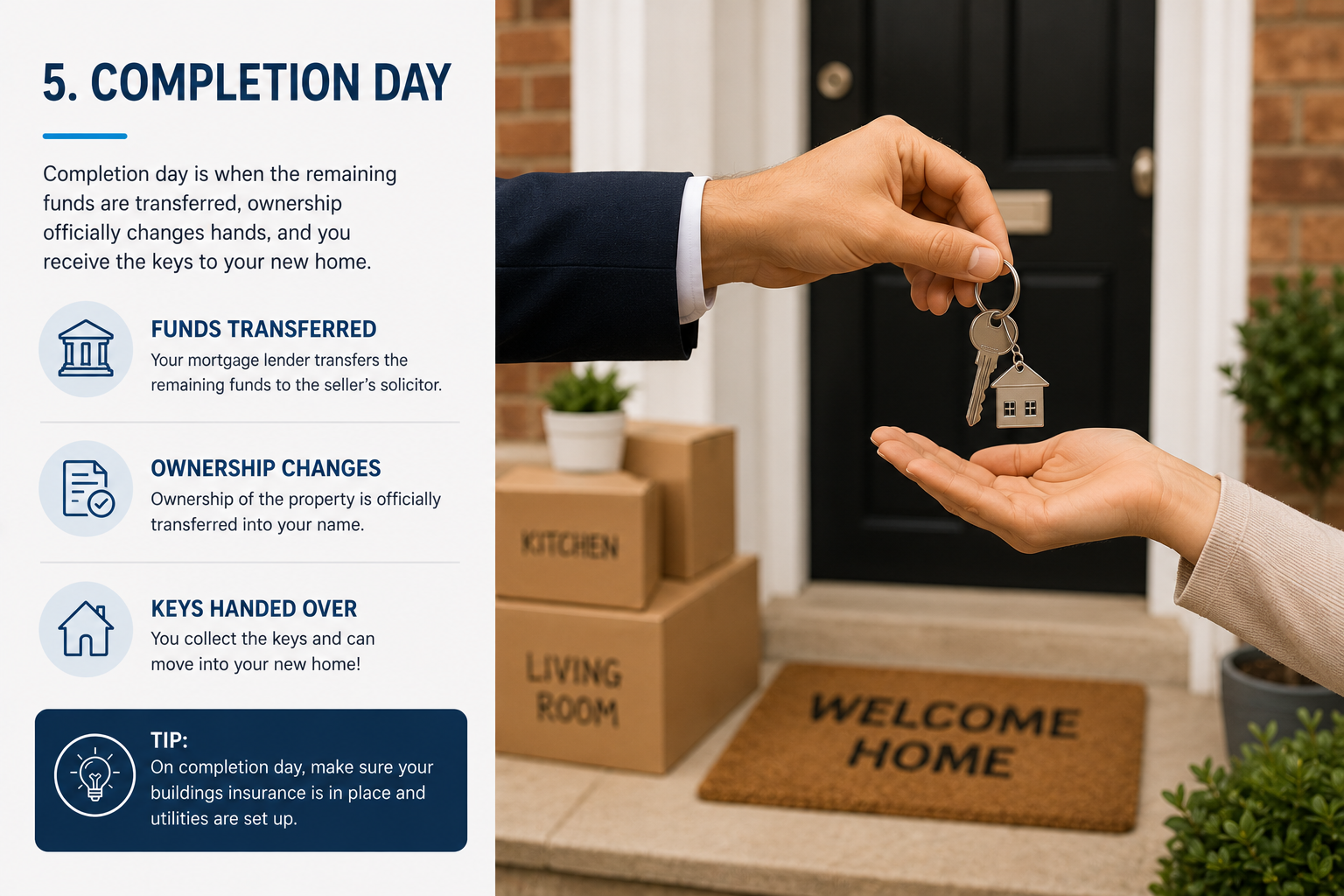
Completion day is when the remaining funds are transferred, ownership officially changes hands, and you receive the keys to your new home.
Who Is Involved in the Home Buying Process?
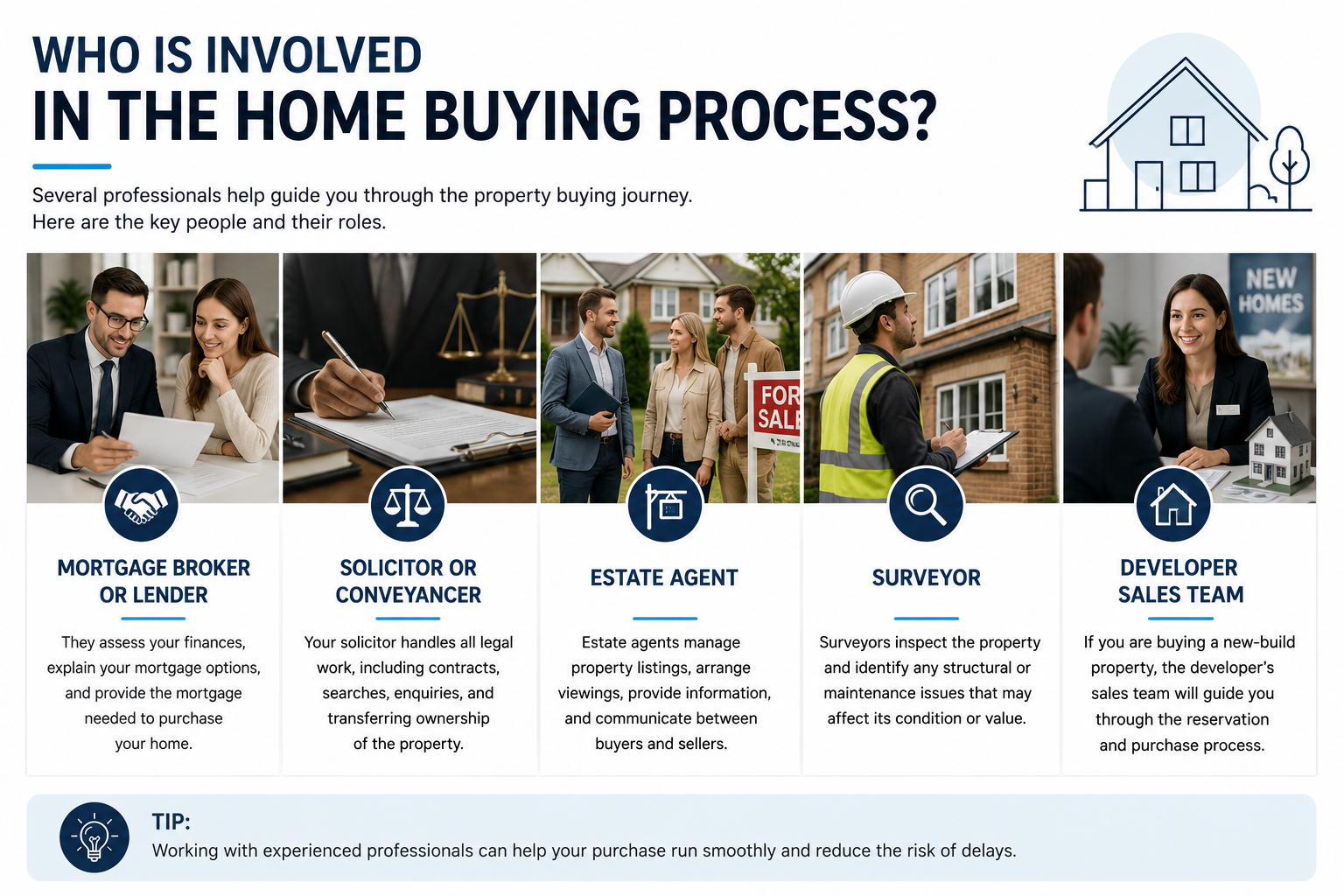
Several professionals help guide you through the property buying journey.
Mortgage Broker or Lender
They assess your finances and provide the mortgage needed to purchase your home.
Solicitor or Conveyancer
Your solicitor handles all legal work, including contracts, searches, and transferring ownership.
Estate Agent
Estate agents manage property listings, arrange viewings, and communicate between buyers and sellers.
Surveyor
Surveyors inspect the property and identify any structural or maintenance issues.
Developer Sales Team
If you are buying a new-build property, the developer’s sales team will guide you through the reservation and purchase process.
Knowing who to contact at each stage can help your purchase run smoothly.
How Much Does It Cost to Buy a Home?
Buying a home involves more than just the property price. Buyers should also budget for additional costs, including:
- Deposit (typically 5% to 20%)
- Stamp Duty Land Tax (SDLT)
- Solicitor and conveyancing fees
- Mortgage arrangement fees
- Property surveys and valuations
- Removal and moving costs
First-time buyers in England may qualify for Stamp Duty relief on eligible properties, helping reduce upfront costs.
Planning ahead for these expenses can help prevent unexpected financial pressure during the purchase process.
Mortgages and Financing Your Home

For most buyers, a mortgage is needed to purchase a property. Choosing the right mortgage can make a significant difference to your monthly payments and long-term costs.
Common mortgage options include:
Fixed-Rate Mortgages
Your interest rate stays the same for a set period, giving predictable monthly payments.
Variable-Rate Mortgages
Rates can increase or decrease depending on market conditions.
Tracker Mortgages
These follow the Bank of England base rate and may change over time.
Before applying, compare mortgage rates, lender fees, and repayment terms carefully. Many buyers also use mortgage brokers to access specialist advice and exclusive deals.
Support for First-Time Buyers
There are several schemes and incentives designed to help first-time buyers get onto the property ladder.
First-Time Buyer Benefits
Stamp Duty Relief
Eligible first-time buyers can benefit from reduced or zero Stamp Duty on qualifying properties.
Low-Deposit Mortgages
Many lenders offer 95% mortgages, meaning buyers may only need a 5% deposit.
Developer Incentives
Some developers provide offers such as deposit contributions, upgrades, or moving cost support.
Government Schemes for First-Time Buyers
First Homes Scheme
Offers selected new-build homes at discounted prices for eligible buyers.
Shared Ownership
Allows buyers to purchase a percentage of a property and pay rent on the remaining share.
Mortgage Guarantee Scheme
Supports buyers with smaller deposits by encouraging lenders to offer higher loan-to-value mortgages.
Help to Buy Wales
Available on selected developments in Wales for qualifying buyers.
These schemes can make buying your first home more affordable and accessible.
Benefits of Buying a New-Build Home
New-build homes have become increasingly popular with buyers across the UK.
Some of the main advantages include:
- Modern layouts and contemporary designs
- Energy-efficient heating systems and insulation
- Lower maintenance and repair costs
- NHBC warranties and insurance protection
- Chain-free purchases for faster transactions
- Potential savings on utility bills
Many developers also offer incentives specifically for first-time buyers and home movers.
Buying an Older Property
Older homes often provide more character, established neighbourhoods, and larger gardens. However, buyers should also consider potential maintenance and renovation costs.
Common issues in older properties may include:
- Outdated heating systems
- Older wiring or plumbing
- Damp or structural concerns
- Lower energy efficiency ratings
A thorough property survey is highly recommended before purchasing an older home.
Property Surveys and Legal Checks
Property surveys and legal checks help protect buyers before contracts are exchanged.
Your solicitor will carry out searches covering:
- Local authority records
- Environmental risks
- Drainage and water information
- Property ownership and boundaries
Meanwhile, property surveys identify any structural or maintenance issues that may affect the property’s value or condition.
Having the correct paperwork and responding quickly to requests can help avoid delays.
Exchange, Completion and Moving Day
Exchange of Contracts
Exchanging contracts is one of the most important stages because the purchase becomes legally binding. After this point, pulling out of the sale may result in financial penalties.
Completion Day
On completion day:
- Mortgage funds are transferred
- Ownership officially changes
- You collect the keys to your new home
This is the final stage of the home buying process.
Common Home Buying Mistakes to Avoid
Underestimating Costs
Many buyers focus only on the deposit and forget additional costs such as Stamp Duty, surveys, legal fees, and moving expenses.
Skipping Property Surveys
Avoiding surveys to save money can lead to expensive repairs later. Even new-build homes may benefit from snagging inspections before moving in.
Delays with Paperwork
Slow responses to mortgage lenders or solicitors can delay your purchase. Staying organised and providing documents quickly helps keep everything on track.
Start Your Home Buying Journey Today
Whether you’re buying your first home, upgrading to a larger property, or investing in a new-build development, understanding the home buying process is the key to a successful move.
With the right preparation, professional advice, and financial planning, buying a home in the UK can be a smooth and rewarding experience.