

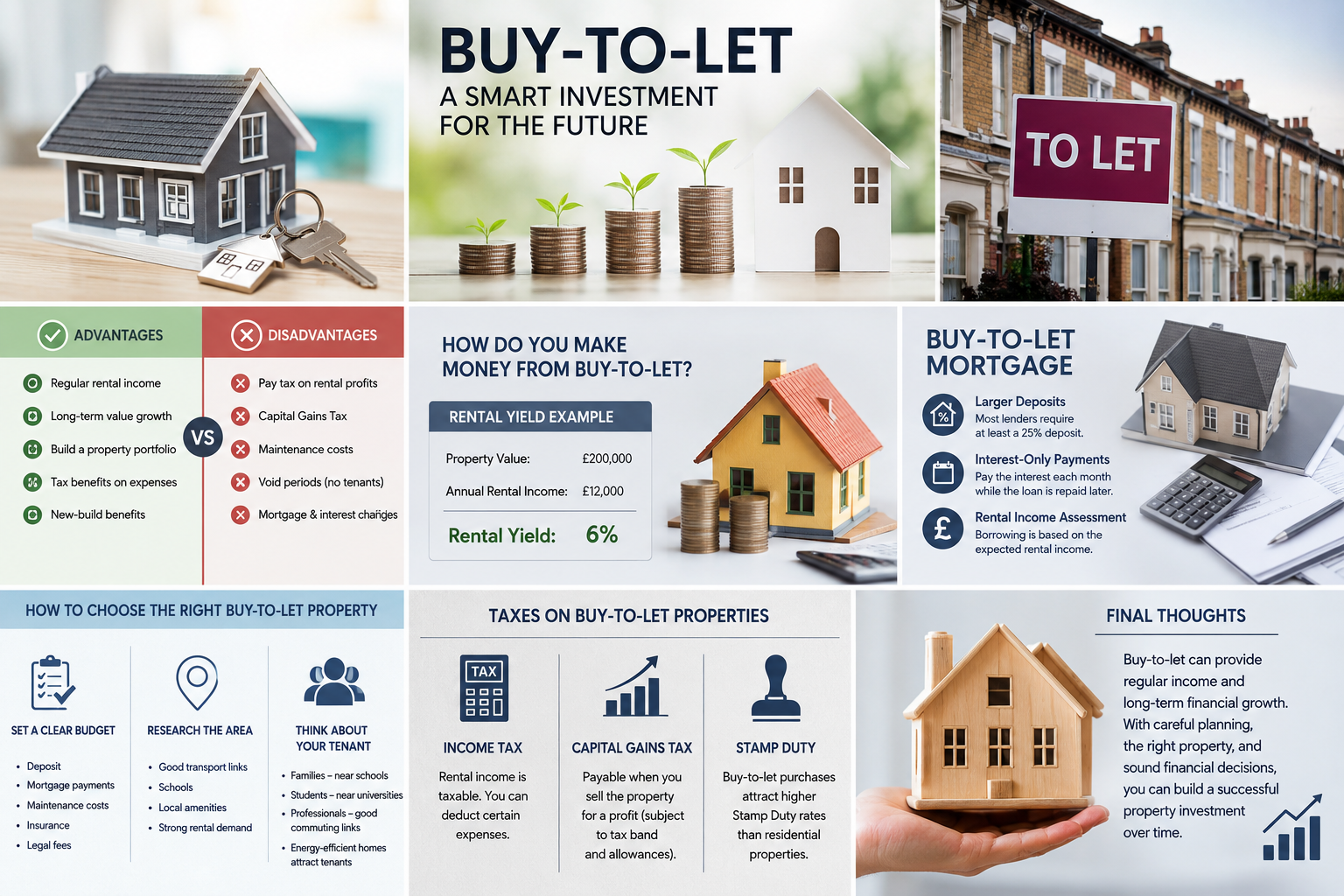
Buy-to-let is when you purchase a property with the intention of renting it out to tenants rather than living in it yourself. It can be a popular way to generate regular rental income and invest in property for the long term.
If you’re considering becoming a landlord, understanding how buy-to-let works can help you make informed financial decisions.

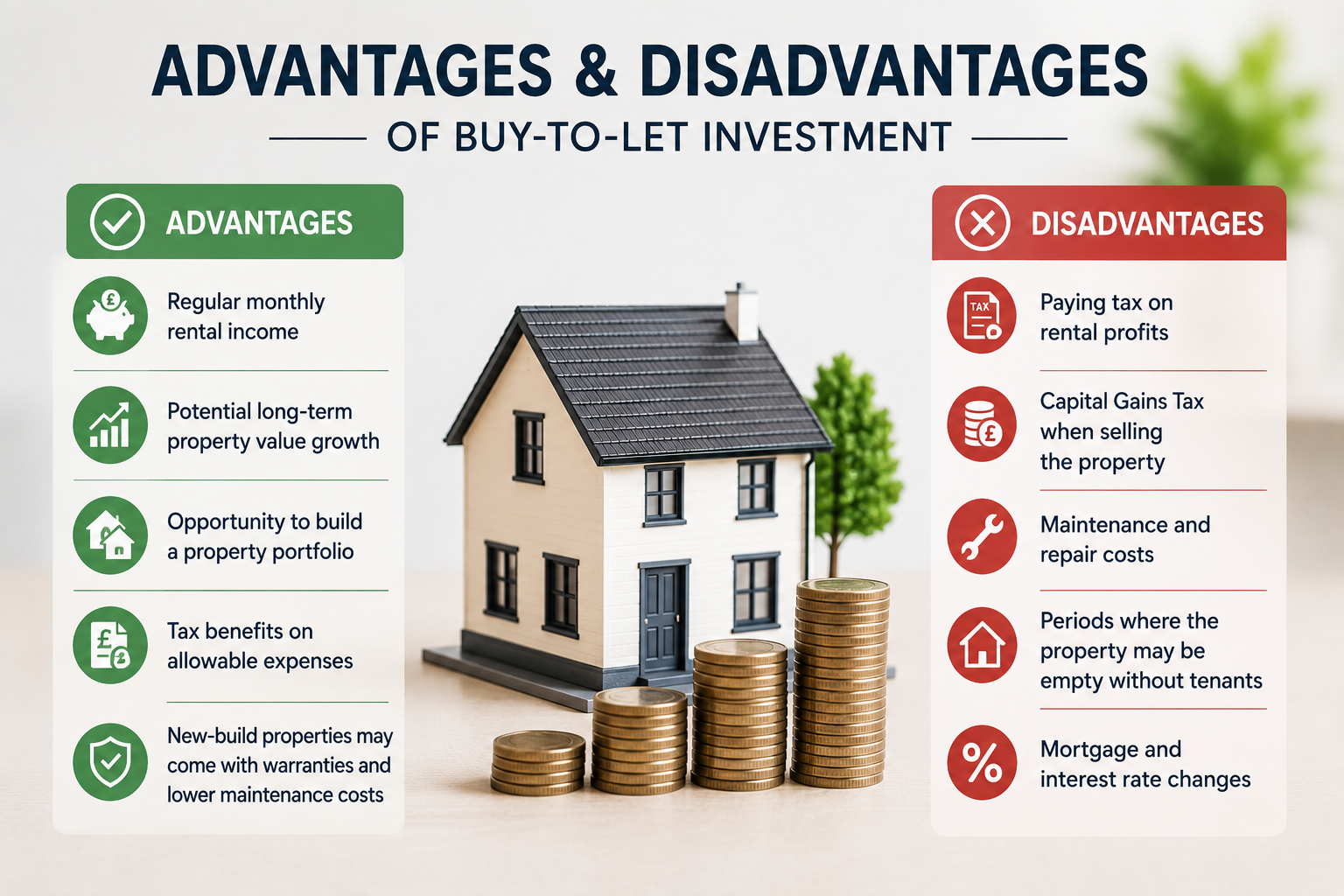
Advantages of Buy-to-Let
A buy-to-let property can offer several benefits, including:
- Regular monthly rental income
- Potential long-term property value growth
- Opportunity to build a property portfolio
- Certain allowable expenses can be deducted from rental income for tax purposes
- New-build properties may come with warranties and lower maintenance costs
Property investment can provide both short-term income and long-term financial growth when managed carefully.
Potential Disadvantages
Before investing, it’s important to understand the possible downsides, such as:
- Paying tax on rental profits
- Capital Gains Tax when selling the property
- Maintenance and repair costs
- Periods where the property may be empty without tenants
- Mortgage and interest rate changes
Careful budgeting is essential to ensure your investment remains profitable.
How Do You Make Money From Buy-to-Let?
Most landlords earn money through:
- Monthly rental income
- Increases in property value over time
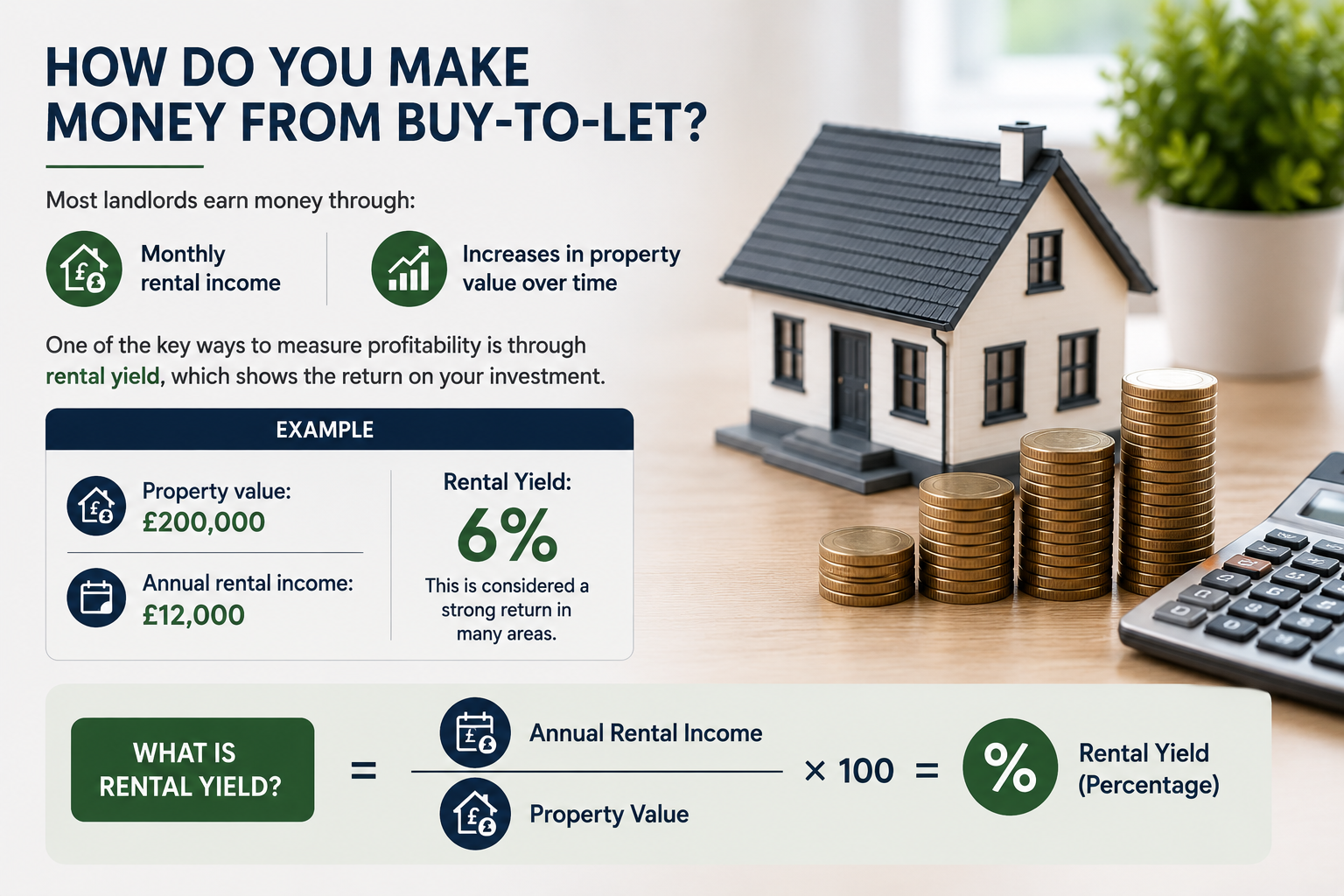
One of the key ways to measure profitability is through rental yield, which shows the return on your investment.
For example:
- Property value: £200,000
- Annual rental income: £12,000
This would give you a rental yield of 6%, which is considered a strong return in many areas.
What Is a Buy-to-Let Mortgage?
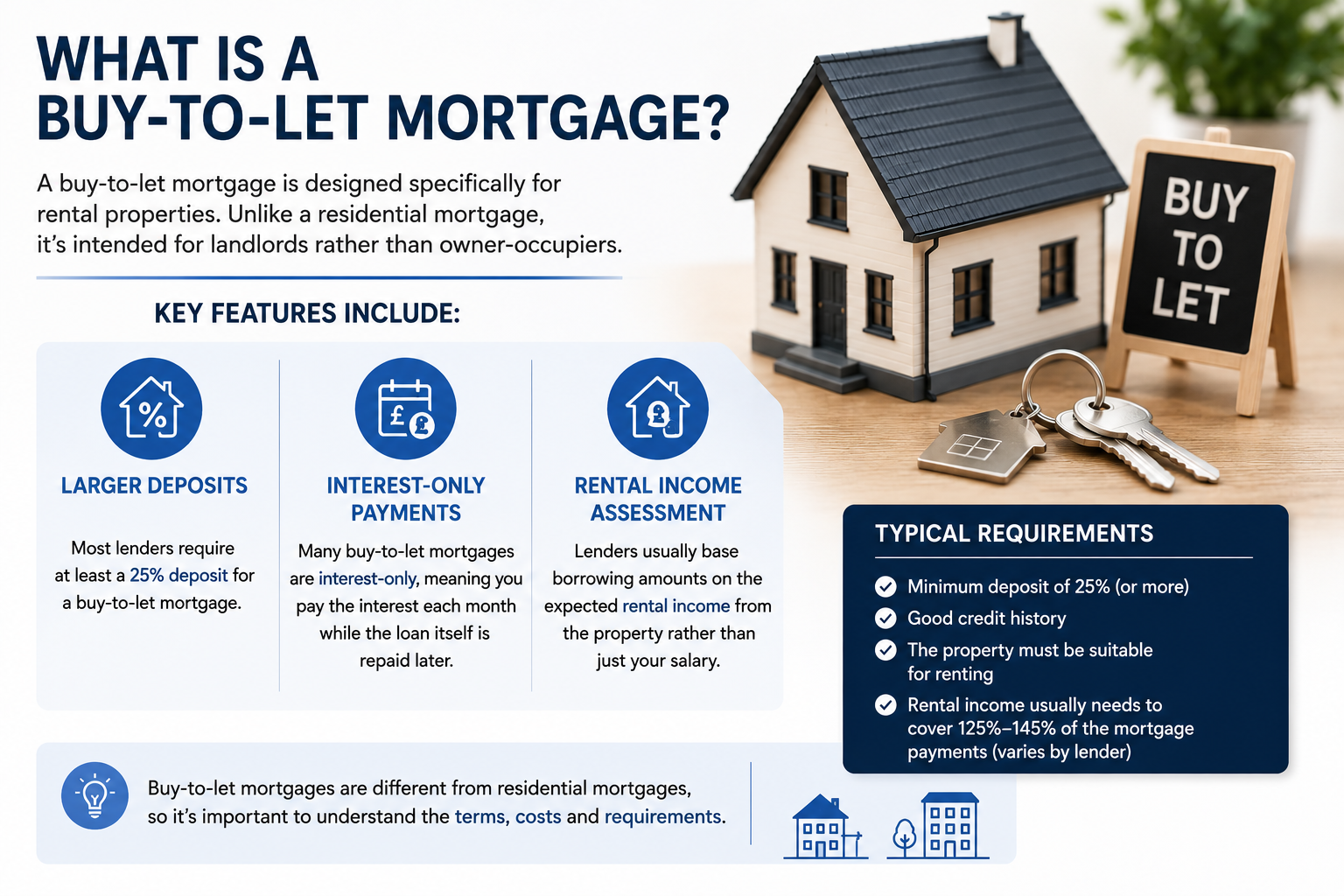
A buy-to-let mortgage is designed specifically for rental properties. Unlike a residential mortgage, it’s intended for landlords rather than owner-occupiers.
Key Features Include:
Larger Deposits
Most lenders require at least a 25% deposit for a buy-to-let mortgage.
Interest-Only Payments
Many buy-to-let mortgages are interest-only, meaning you pay the interest each month while the loan itself is repaid later.
Rental Income Assessment
Lenders usually base borrowing amounts on the expected rental income from the property rather than just your salary.
How to Choose the Right Buy-to-Let Property
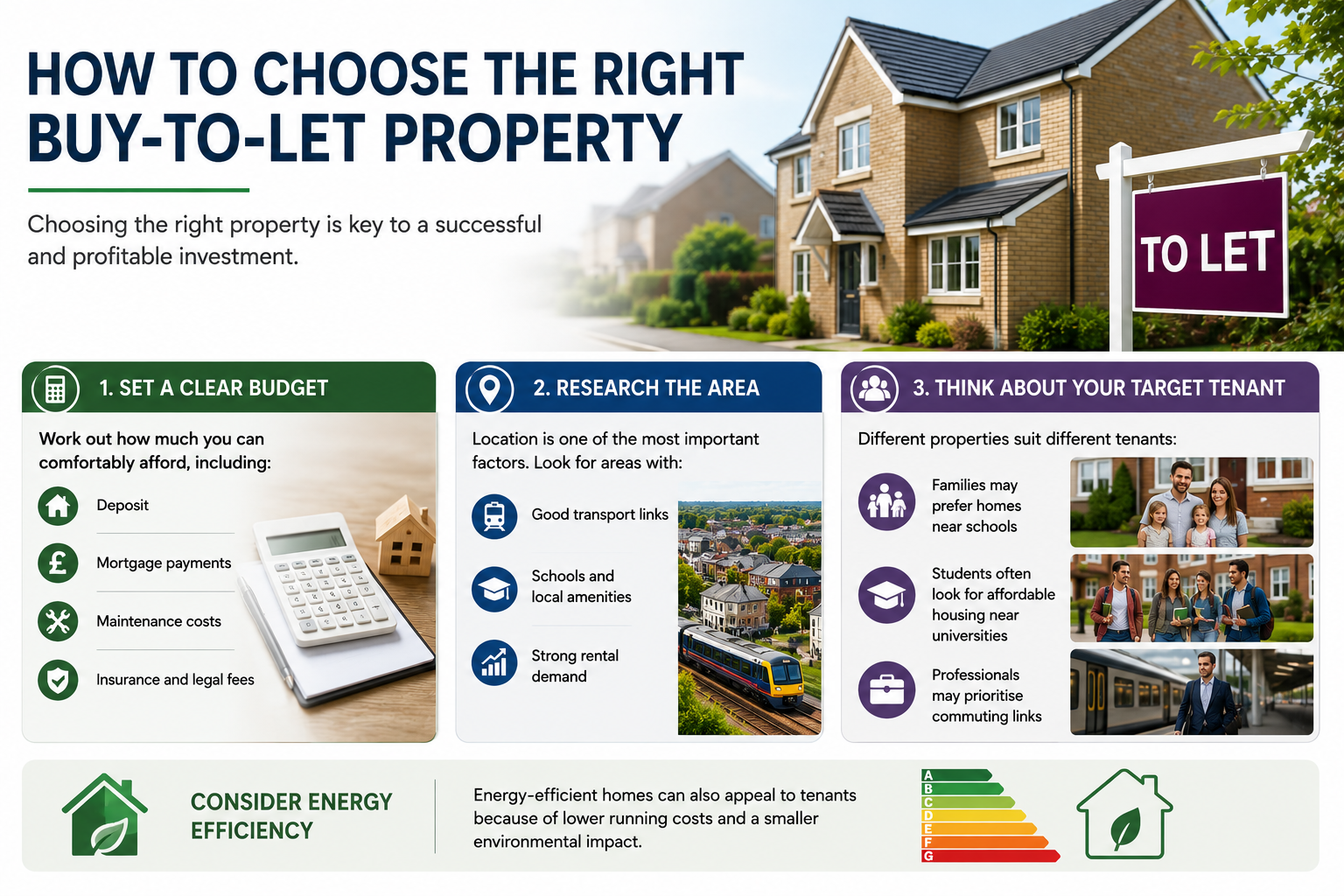
Set a Clear Budget
Work out how much you can comfortably afford, including:
- Deposit
- Mortgage payments
- Maintenance costs
- Insurance and legal fees
Research the Area
Location is one of the most important factors. Look for areas with:
- Good transport links
- Schools and local amenities
- Strong rental demand
Think About Your Target Tenant
Different properties suit different tenants:
- Families may prefer homes near schools
- Students often look for affordable housing near universities
- Professionals may prioritise commuting links
Energy-efficient homes can also appeal to tenants because of lower running costs.
Taxes on Buy-to-Let Properties
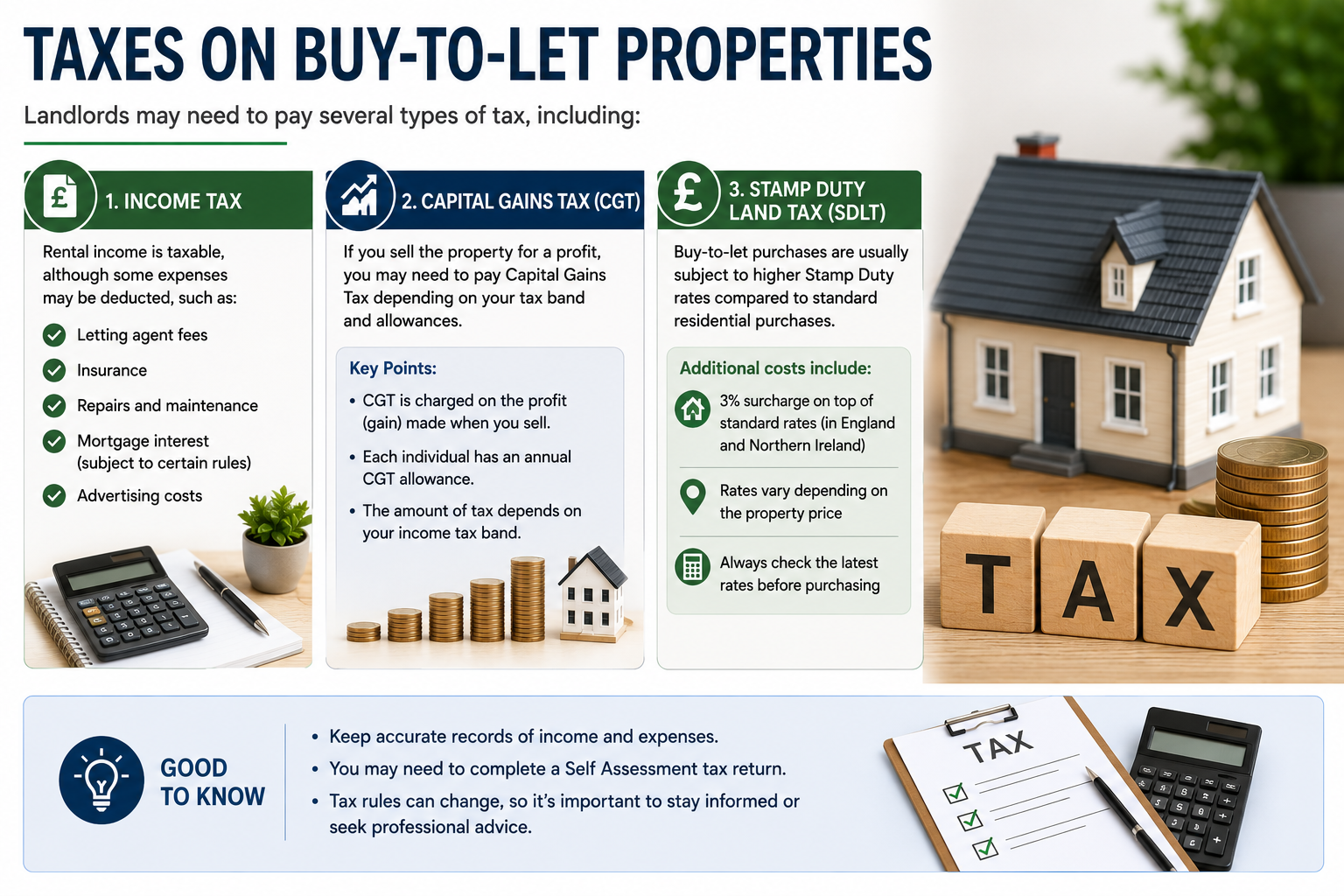
Landlords may need to pay several types of tax, including:
Income Tax
Rental income is taxable, although some expenses may be deducted, such as:
- Letting agent fees
- Insurance
- Repairs and maintenance
Capital Gains Tax (CGT)
If you sell the property for a profit, you may need to pay Capital Gains Tax depending on your tax band and allowances.
Stamp Duty
Buy-to-let purchases are usually subject to higher Stamp Duty rates compared to standard residential purchases.
Final Thoughts
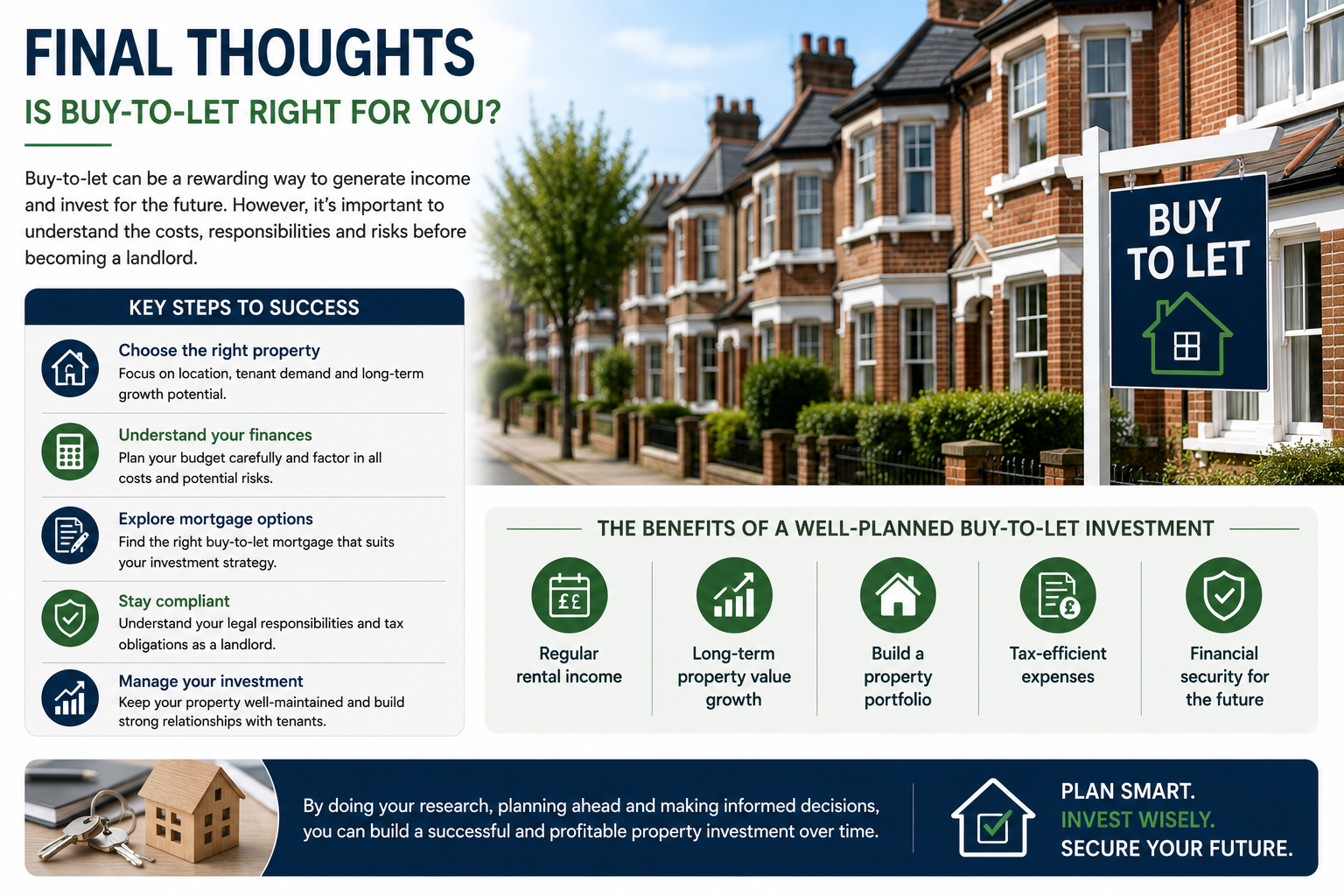
Buy-to-let can be a rewarding way to generate income and invest for the future. However, it’s important to understand the costs, responsibilities and risks before becoming a landlord. By choosing the right property, understanding mortgage options and planning your finances carefully, you can build a successful property investment over time.