




Buying a home is one of the biggest milestones in life, whether you’re a first-time buyer, moving home, or purchasing a property to let. Because most people don’t buy homes regularly, the home buying process can sometimes feel overwhelming.
The good news is that the process is much simpler when broken down step by step. From saving for a deposit and applying for a mortgage to exchanging contracts and moving into your new property, understanding each stage can help make your journey smoother and less stressful.
This guide explains everything you need to know about buying a new build home in the UK, including mortgages, legal checks, surveys, completion day, and moving in.
Your Home Buying Roadmap
The home buying process follows a clear path from searching for properties to collecting your keys.
Typically, the journey includes:
- Planning your budget and deposit
- Finding and reserving your ideal home
- Applying for a mortgage
- Completing legal checks and surveys
- Exchanging contracts and completing the purchase
- Moving into your new home
If you are buying a new build property, you may also qualify for schemes such as Deposit Boost, Part Exchange, or low-deposit options designed to make homeownership more accessible.
1-Before You Start
Assess Your Budget and Affordability
Before searching for homes, it’s important to understand how much you can realistically afford. Consider:
- Your income and monthly expenses
- Your preferred property type
- Your ideal location
- Deposit savings
- Additional buying costs
This will help you set a realistic budget and narrow down your property search.
Save for Your Deposit
Saving for a deposit is one of the most important steps when buying a house. A larger deposit can:

- Help secure lower mortgage interest rates
- Reduce your monthly repayments
- Increase your mortgage approval chances
- Help cover extra costs such as legal fees and Stamp Duty
If saving is difficult, many developers and lenders offer low-deposit schemes for first-time buyers and home movers.
Understand the Additional Costs
Buying a property involves more than just your mortgage payments. Other costs may include:
- Stamp Duty Land Tax (SDLT)
- Conveyancing and legal fees
- Valuation and survey fees
- Mortgage arrangement fees
- Reservation fees for new builds
- Broker fees and disbursements
Planning for these costs early can help avoid unexpected financial pressure later.
Get a Mortgage in Principle (MIP)
A Mortgage in Principle (also called an Agreement in Principle or Decision in Principle) gives an estimate of how much a lender may allow you to borrow.
Benefits of getting a Mortgage in Principle include:
- Showing sellers and developers you’re a serious buyer
- Helping you understand your budget
- Improving confidence when reserving a property
Most Mortgage in Principles are valid for around 90 days and can often be arranged online within 24 hours.
2-Finding and Reserving Your Home
View Properties and Show Homes
Once your finances are prepared, you can start viewing properties in your preferred areas.
For new build developments, visiting show homes is highly recommended because it allows you to experience the layout, finishes, and lifestyle the property offers.
Take your time comparing locations, transport links, schools, amenities, and property sizes before making your decision.
Reserving a New Build Home
Unlike older homes where buyers usually negotiate prices, new build homes are often reserved at a fixed price.
Before reserving your property:
- Make sure the home fits your budget
- Check what fixtures and fittings are included
- Ask about incentives or buyer schemes
- Confirm reservation fees and timelines
Once reserved, the property is usually removed from the market while your purchase progresses.
3-Mortgage and Financing
Types of Mortgages

There are several mortgage options available in the UK, including:
Fixed-Rate Mortgages
Your interest rate stays the same for a set period, offering predictable monthly payments.
Variable-Rate Mortgages
Interest rates can rise or fall depending on market conditions.
Tracker Mortgages
These follow the Bank of England base rate, meaning payments can change over time.
Guarantor Mortgages
A family member guarantees repayments if needed, helping buyers with smaller deposits or lower income.
Choosing the Right Mortgage
The best mortgage depends on your financial situation and future plans. Consider:
- Your monthly budget
- How long you plan to stay in the property
- Whether you prefer stable payments or flexibility
- Overall costs including fees and interest rates
Speaking with a mortgage adviser or broker can help you compare deals and find suitable options.
Documents Needed for a Mortgage Application
Most lenders will ask for:
- Passport or driving licence
- Proof of address
- Recent payslips
- Bank statements
- P60 form
- Proof of benefits if applicable
- Tax returns or SA302 forms for self-employed applicants
Providing documents early can help speed up the mortgage approval process.
4-Legal Checks and Property Surveys

Conveyancing and Legal Work
A solicitor or licensed conveyancer manages the legal side of the purchase. Their role includes:
- Checking property ownership and legal title
- Conducting local authority searches
- Managing contracts and payments
- Handling exchange and completion
Conveyancing is a key part of the home buying process and helps protect buyers from legal issues.
Property Valuations and Surveys
Your mortgage lender will arrange a valuation survey to confirm the property’s value.
You may also choose a more detailed survey, such as:
Level 1 – Condition Survey
Basic overview of the property’s condition.
Level 2 – Homebuyer Survey
More detailed assessment inside and outside the property.
Level 3 – Building Survey
Comprehensive structural inspection, often recommended for older homes.
If serious issues are discovered, buyers may renegotiate the purchase price or request repairs.
5-Exchange, Completion and Moving In

Exchanging Contracts
Exchange of contracts is one of the most important stages because it legally commits both parties to the sale.
Before exchanging:
- Read contracts carefully
- Ensure mortgage approval is complete
- Arrange buildings insurance
Once contracts are exchanged, the completion date is officially agreed.
Completion Day
Completion day is when ownership of the property officially transfers to you.
On this day:
- Your solicitor transfers funds
- The seller releases the keys
- You can move into your new home
This is the final step in the home buying process and the moment your new chapter begins.
Moving Day Checklist
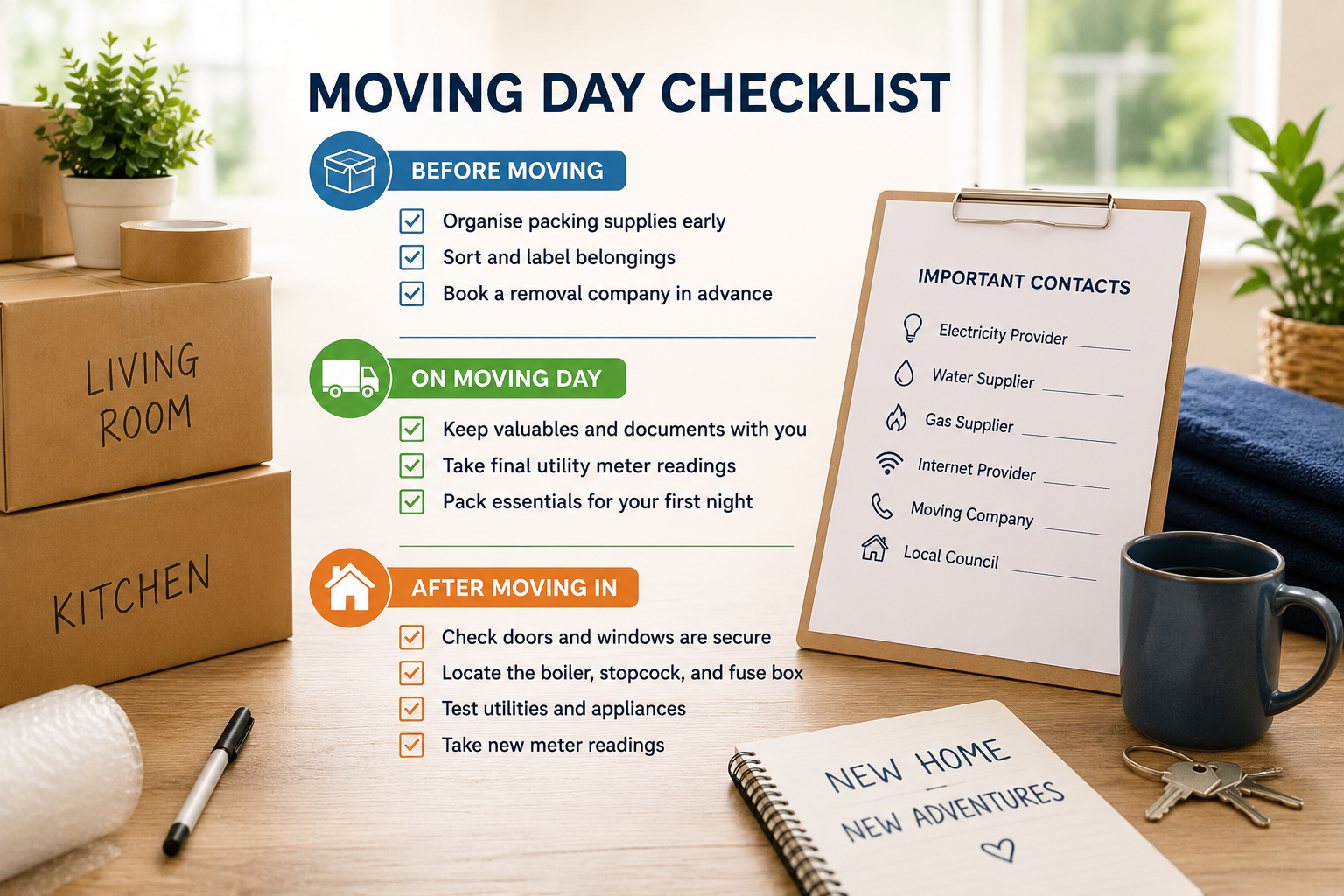
To make moving day easier:
Before Moving
- Organise packing supplies early
- Sort and label belongings
- Book a removal company in advance
On Moving Day
- Keep valuables and documents with you
- Take final utility meter readings
- Pack essentials for your first night
After Moving In
- Check doors and windows are secure
- Locate the boiler, stopcock, and fuse box
- Test utilities and appliances
- Take new meter readings
Start Your Home Buying Journey Today
hether you’re a first-time buyer, investor, or growing family, understanding the home buying process can make your move easier and more enjoyable.
Explore brand-new, energy-efficient homes across the UK and discover helpful schemes designed to make moving simpler, including Part Exchange and low-deposit options.
If you’re ready to take the next step, speak to our team today and begin your journey towards owning your dream home.