



Property investment is one of the most popular ways to build long-term wealth in the UK. Whether you want to earn rental income, grow your savings through property value increases, or build a portfolio, investing in property can offer strong financial opportunities.
This beginner-friendly guide explains how property investment works, the different investment types, and the key costs and benefits to consider.
What Is Property Investment?
Property investment means buying a property to make a financial return. This usually comes from:
- Rental income from tenants
- Selling the property later for a profit
- Or a combination of both
Investors can buy residential properties, renovate homes for resale, or invest through property funds and crowdfunding platforms.

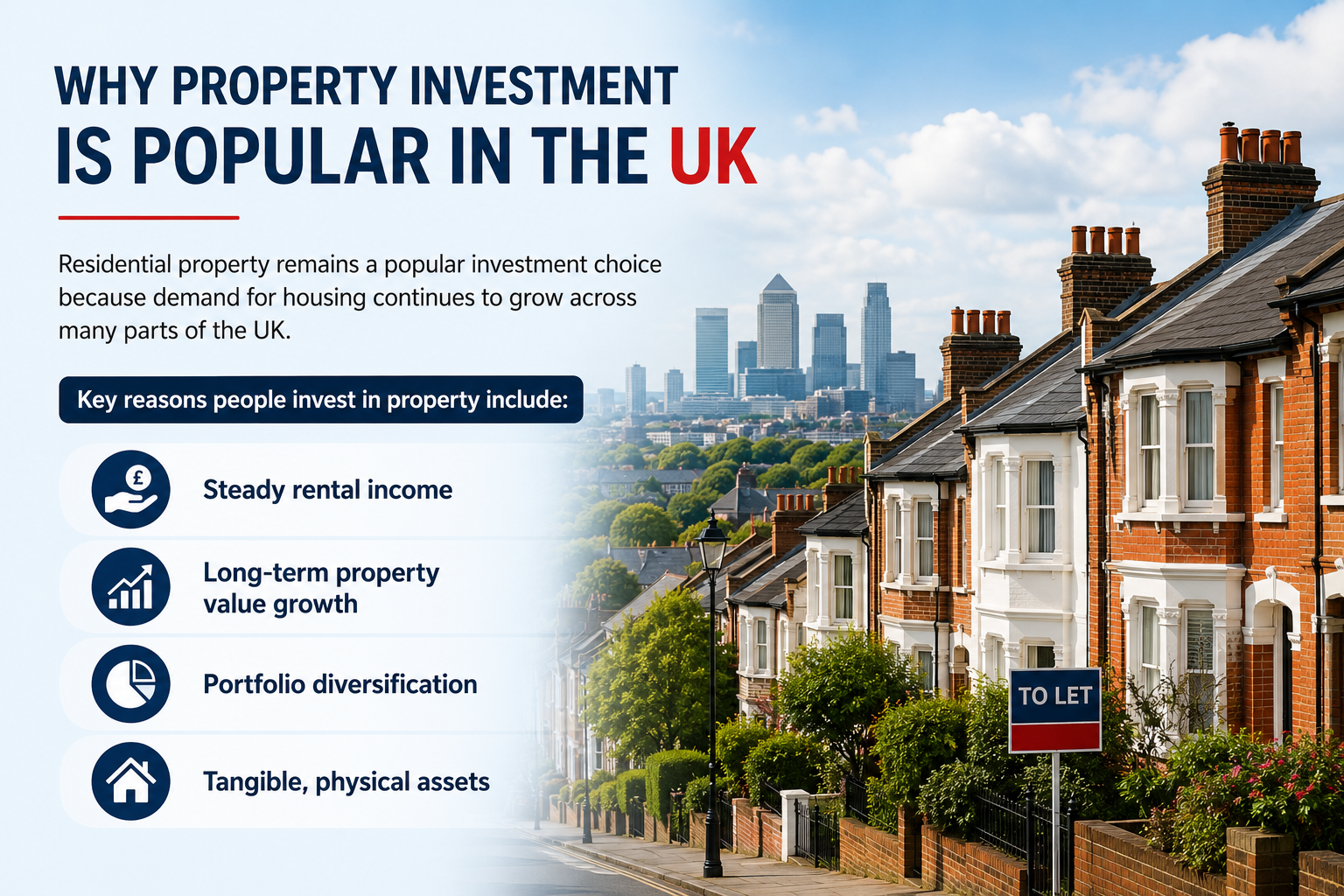
Why Property Investment Is Popular in the UK
Residential property remains a popular investment choice because demand for housing continues to grow across many parts of the UK.
Key reasons people invest in property include:
- Steady rental income
- Long-term property value growth
- Portfolio diversification
- Tangible, physical assets
Types of Property Investment
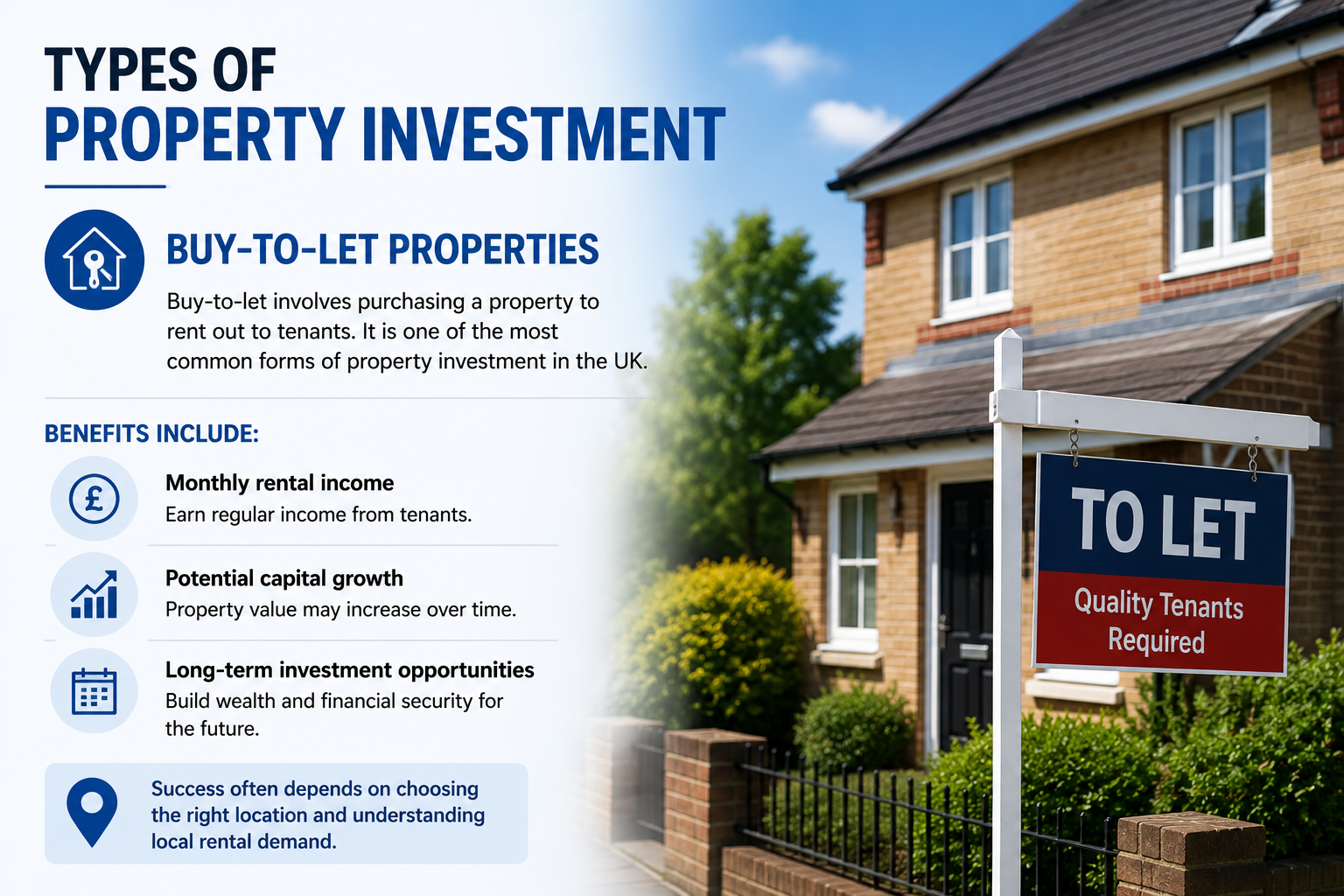
Buy-to-Let Properties
Buy-to-let involves purchasing a property to rent out to tenants. It is one of the most common forms of property investment in the UK.
Benefits include:
- Monthly rental income
- Potential capital growth
- Long-term investment opportunities
Success often depends on choosing the right location and understanding local rental demand.
Property Renovation and Development
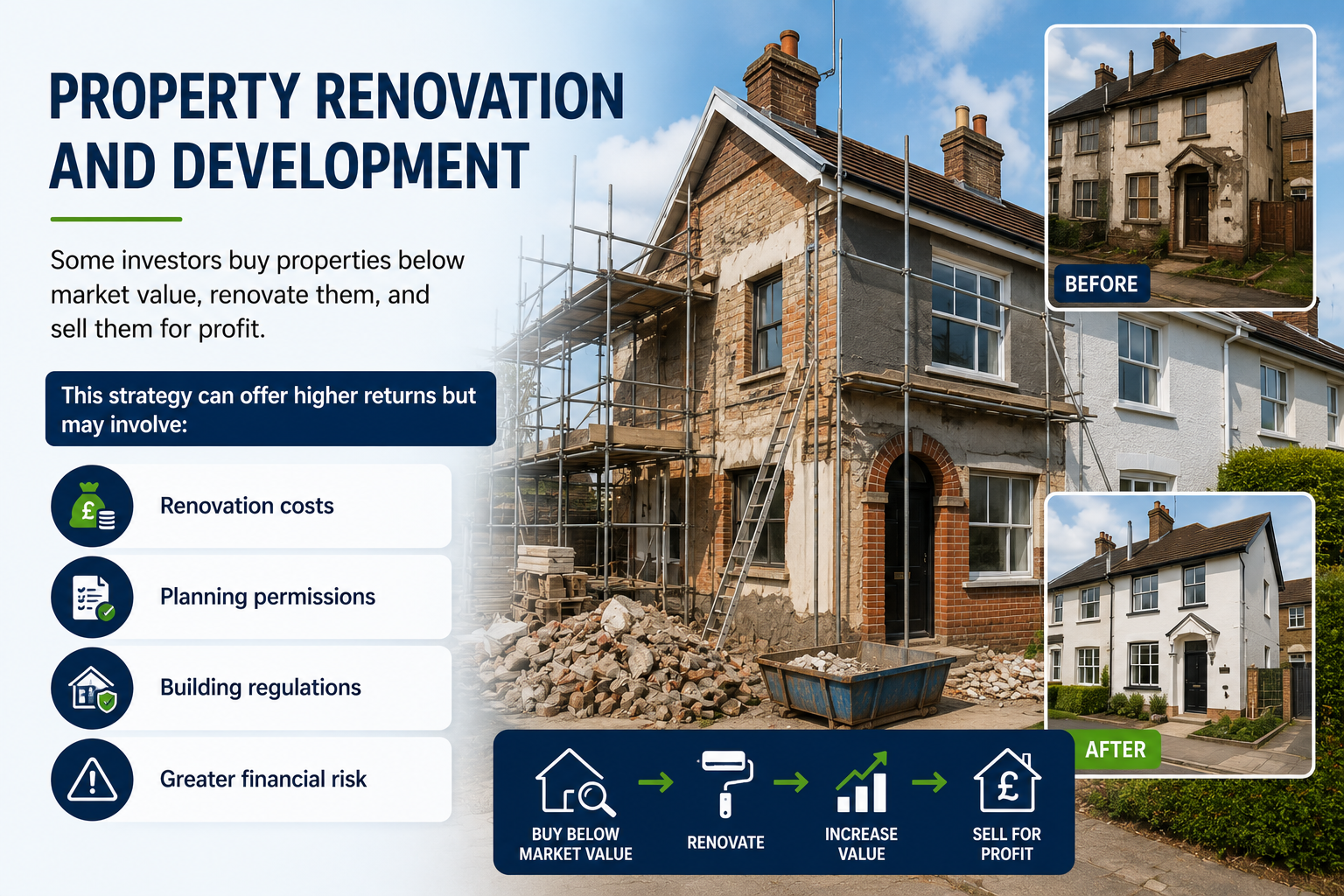
Some investors buy properties below market value, renovate them, and sell them for profit.
This strategy can offer higher returns but may involve:
- Renovation costs
- Planning permissions
- Building regulations
- Greater financial risk
Careful budgeting and market research are essential.
New Build Investment Opportunities
New build homes are becoming increasingly popular with investors because they often:
- Require less maintenance
- Include modern energy-efficient features
- Come with warranties and guarantees
- Appeal to tenants looking for modern homes
Some investors also buy off-plan properties before construction is complete.
Property Investment Trusts and Crowdfunding
If you want to invest with less capital, alternatives include:
REITs (Real Estate Investment Trusts)
These allow investors to buy shares in property portfolios without directly owning or managing property.
Property Crowdfunding
Crowdfunding platforms allow multiple investors to combine funds and invest in property projects together.
Benefits of Property Investment
Property investment can offer several advantages, including:
- Regular rental income
- Long-term capital appreciation
- Portfolio diversification
- Potential tax benefits
- Financial security over time
Well-managed rental properties can also provide relatively passive income.
Risks and Challenges
Like any investment, property investing also carries risks:
- High upfront costs
- Market fluctuations
- Property maintenance expenses
- Periods without tenants
- Landlord responsibilities and legal obligations
It’s important to budget carefully and prepare for unexpected costs.
How to Start Investing in Property
Choose the Right Location
Location plays a major role in rental demand and property value growth.
Consider:
- Transport links
- Schools and universities
- Local amenities
- Employment opportunities
Arrange Your Finances
Most investment properties require a larger deposit, especially for buy-to-let mortgages.
You should also budget for:
- Stamp Duty
- Legal fees
- Surveys
- Insurance
- Maintenance costs
Find the Right Property
View multiple properties and compare:
- Rental potential
- Property condition
- Local demand
- Future growth opportunities
Ongoing Costs to Consider
Property investors should plan for ongoing expenses, including:
- Mortgage repayments
- Building and landlord insurance
- Repairs and maintenance
- Letting agent fees
- Gas and electrical safety checks
- Energy Performance Certificates (EPCs)
You’ll also need to pay tax on rental profits and may pay Capital Gains Tax when selling the property.
Final Thoughts
Property investment can be a rewarding way to build long-term wealth and generate additional income. Whether you choose buy-to-let, renovation projects or new build investments, understanding the costs, risks and market conditions is essential before getting started.
With careful planning and the right strategy, property investing can become a valuable part of your financial future.