


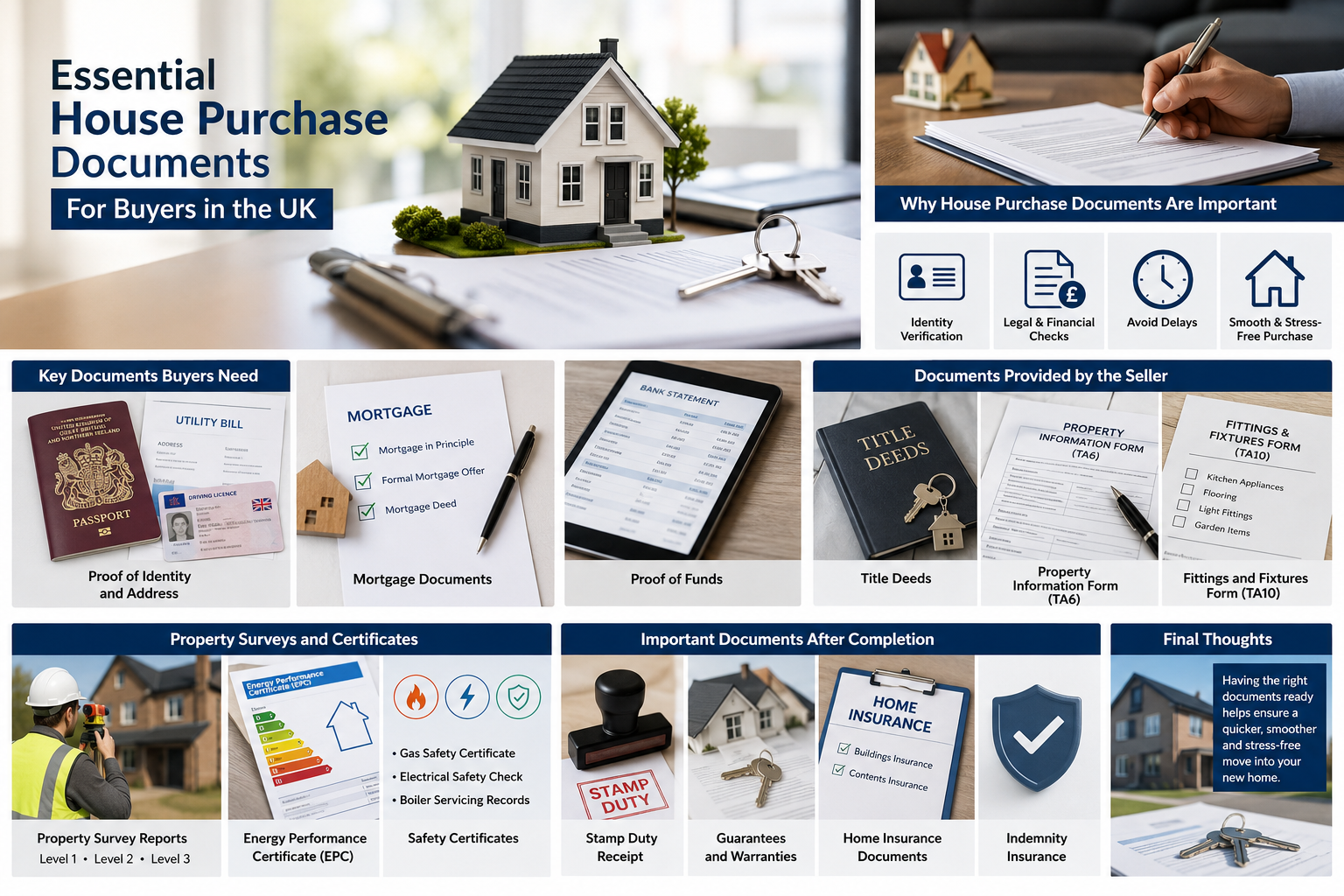
Buying a home is an exciting milestone, but having the right paperwork ready is essential for a smooth and stress-free purchase. Understanding which documents you need can help avoid delays and make the buying process much easier.
This guide explains the key house purchase documents required when buying a property in the UK.
Why House Purchase Documents Are Important
When buying a property, your solicitor and mortgage lender must carry out legal and financial checks before the sale can be completed. Missing paperwork can slow down the process or even risk the purchase falling through.
Being organised from the start can help speed up your move and reduce unnecessary stress.
Key Documents Buyers Need
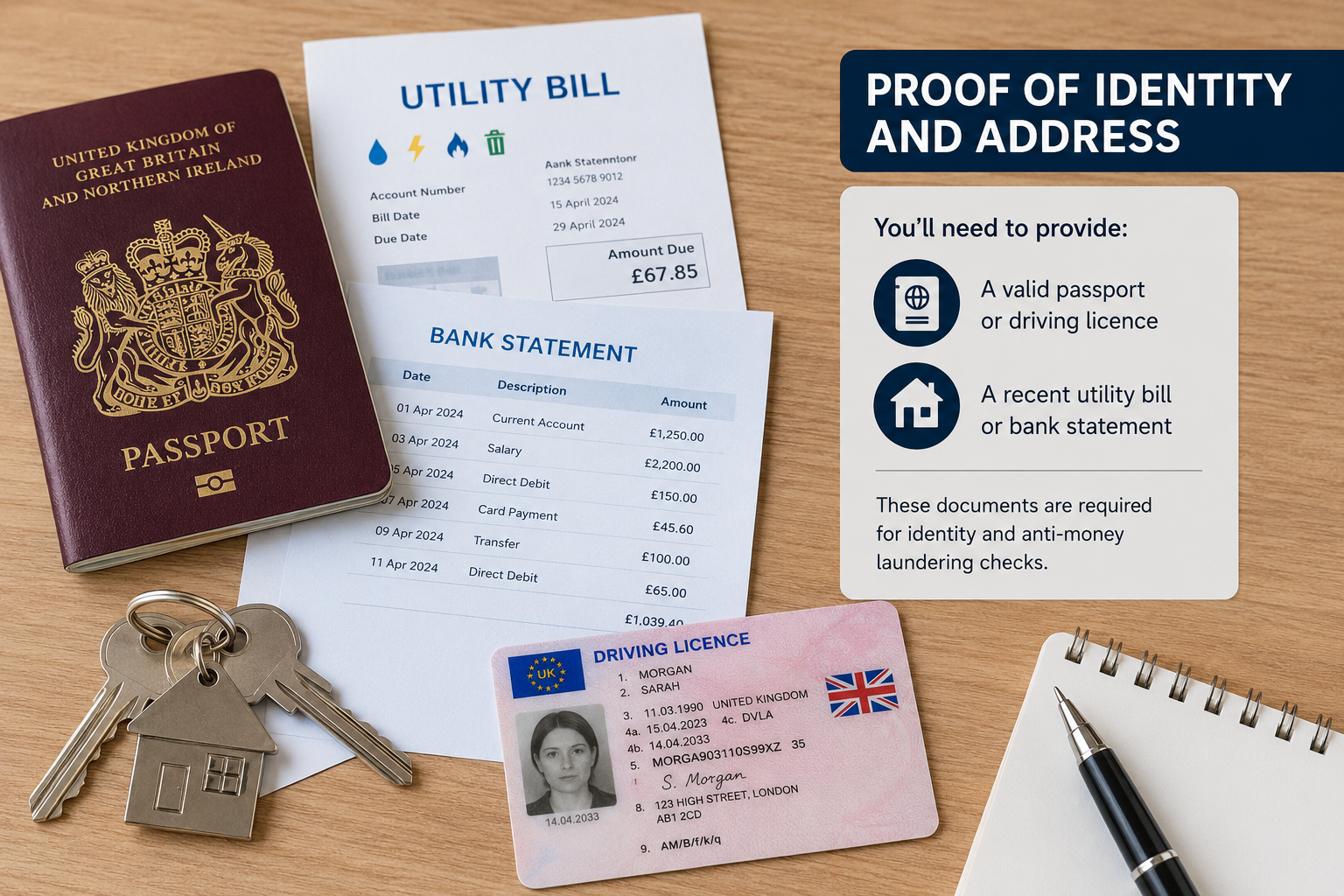
Proof of Identity and Address
You’ll need to provide:
- A valid passport or driving licence
- A recent utility bill or bank statement
These documents are required for identity and anti-money laundering checks.
Mortgage Documents
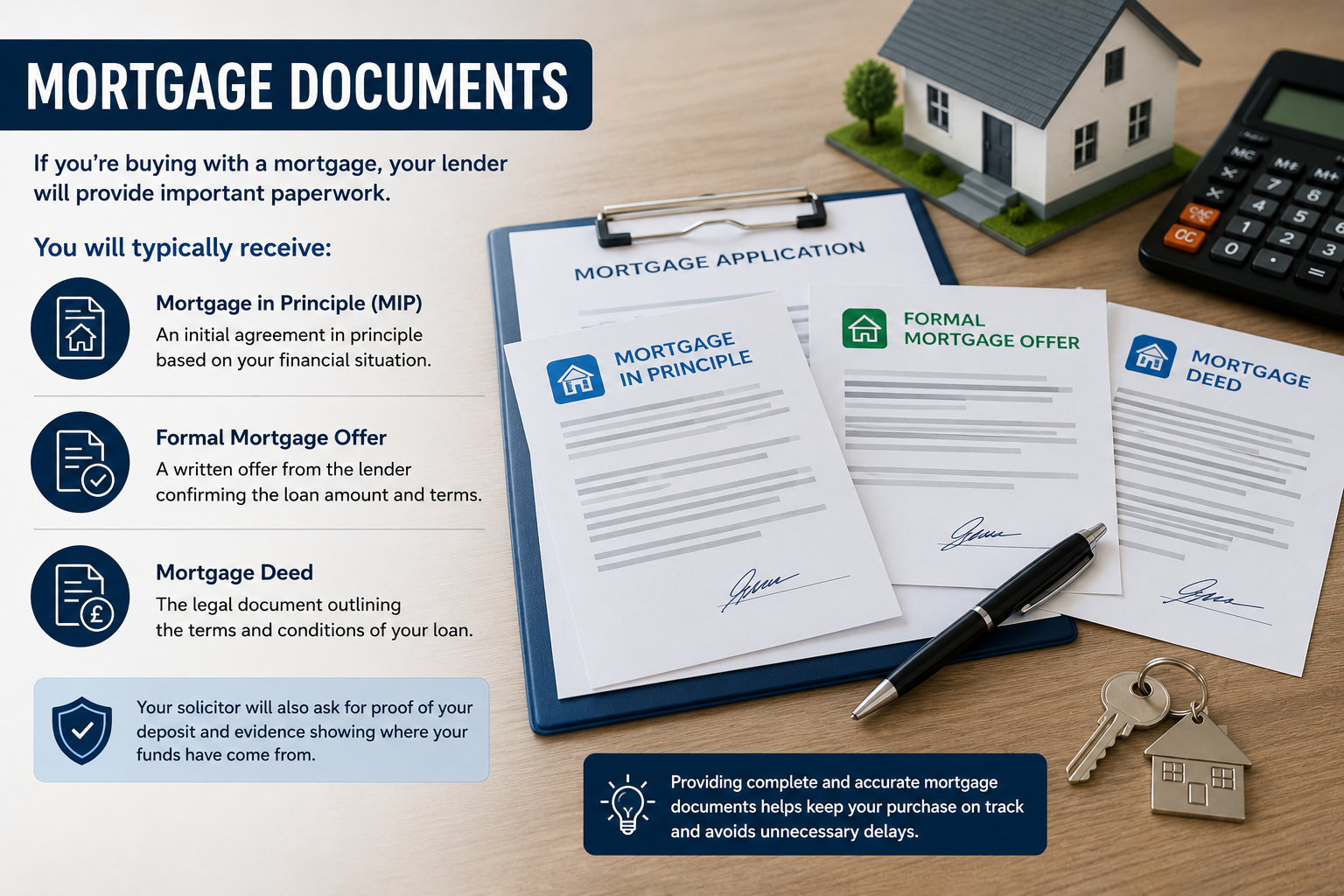
If you’re buying with a mortgage, your lender will provide important paperwork, including:
- Mortgage in Principle (MIP)
- Formal mortgage offer
- Mortgage deed outlining the loan terms
Your solicitor will also ask for proof of your deposit and evidence showing where your funds have come from.
Proof of Funds
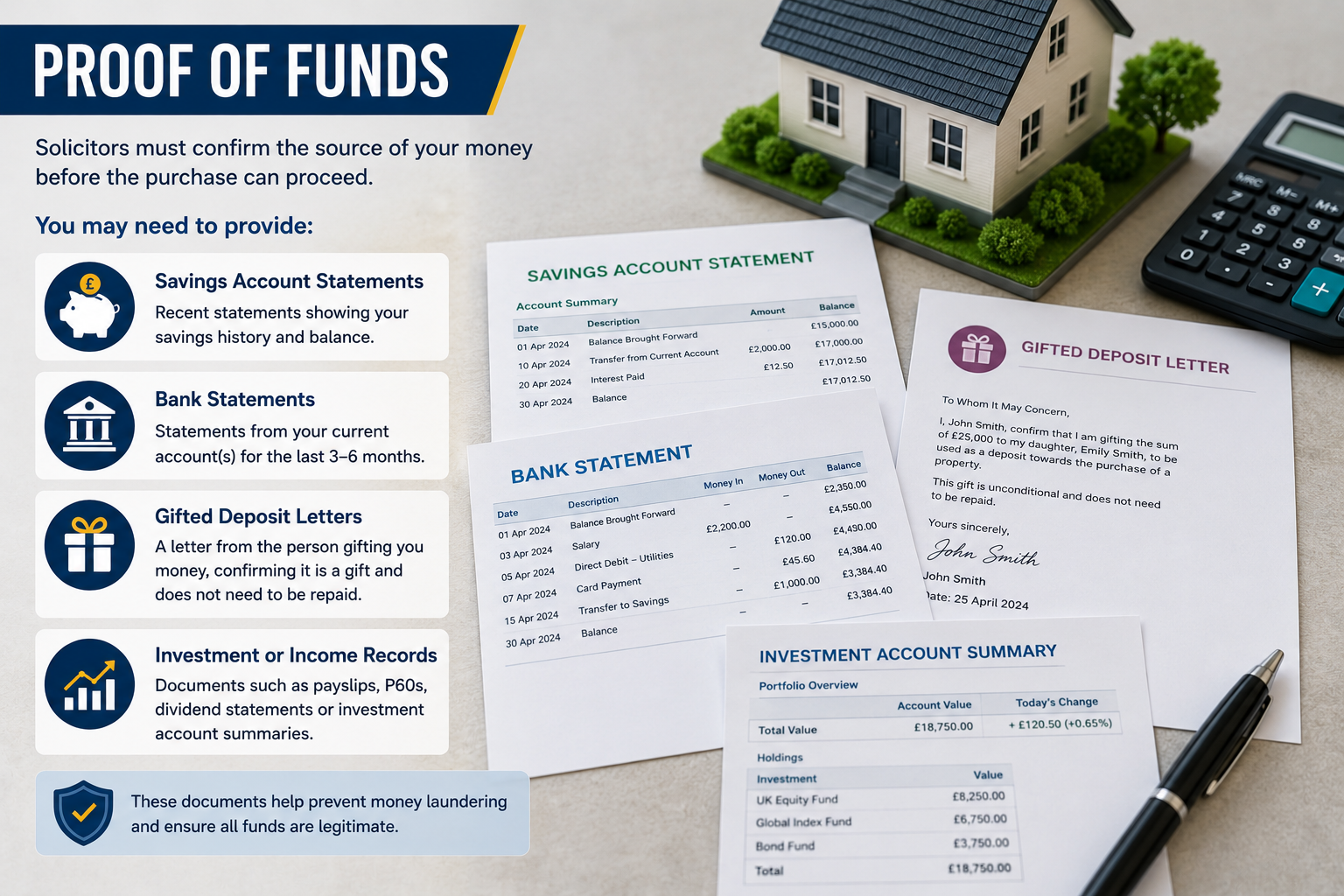
Solicitors must confirm the source of your money before the purchase can proceed.
You may need to provide:
- Savings account statements
- Bank statements
- Gifted deposit letters from family members
- Investment or income records
Documents Provided by the Seller
Title Deeds
These confirm legal ownership of the property and are usually stored digitally through HM Land Registry.
Property Information Form (TA6)
This form includes useful details about the property, such as:
- Boundaries
- Utility information
- Disputes or planning issues
Fittings and Fixtures Form (TA10)
This document explains what is included in the sale, such as:
- Kitchen appliances
- Flooring
- Light fittings
- Garden items
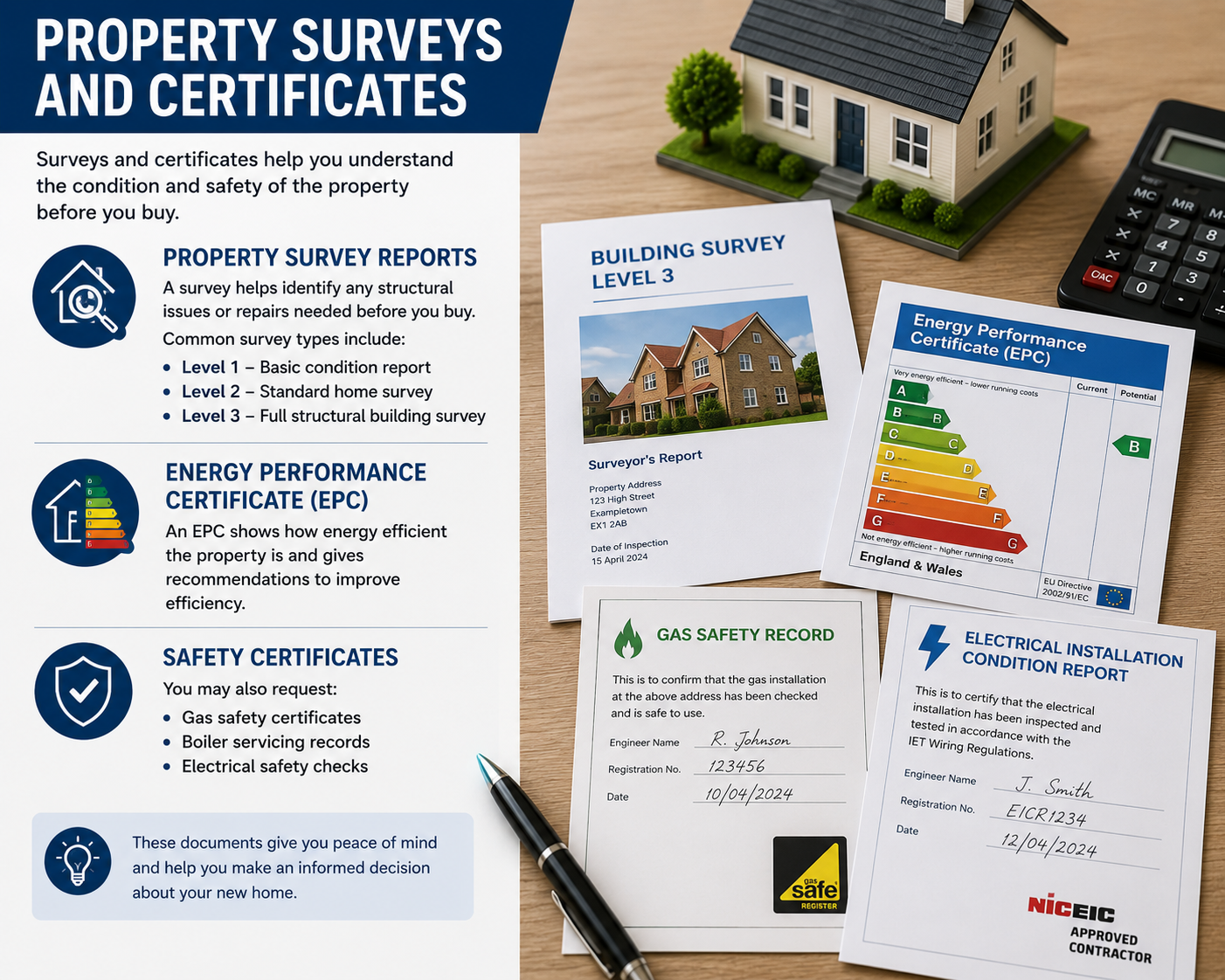
Property Surveys and Certificates
Property Survey Reports
A survey helps identify any structural issues or repairs needed before you buy.
Common survey types include:
- Level 1 – Basic condition report
- Level 2 – Standard home survey
- Level 3 – Full structural building survey
Energy Performance Certificate (EPC)
An EPC shows how energy efficient the property is and gives recommendations to improve efficiency.
Safety Certificates
You may also request:
- Gas safety certificates
- Boiler servicing records
- Electrical safety checks
Important Documents After Completion
Stamp Duty Receipt
If Stamp Duty applies, your solicitor will usually arrange payment and provide confirmation once completed.
Guarantees and Warranties
Keep copies of:
- New build warranties
- Building work guarantees
- FENSA certificates for windows and doors
- Appliance guarantees
These documents can be important if problems arise later.
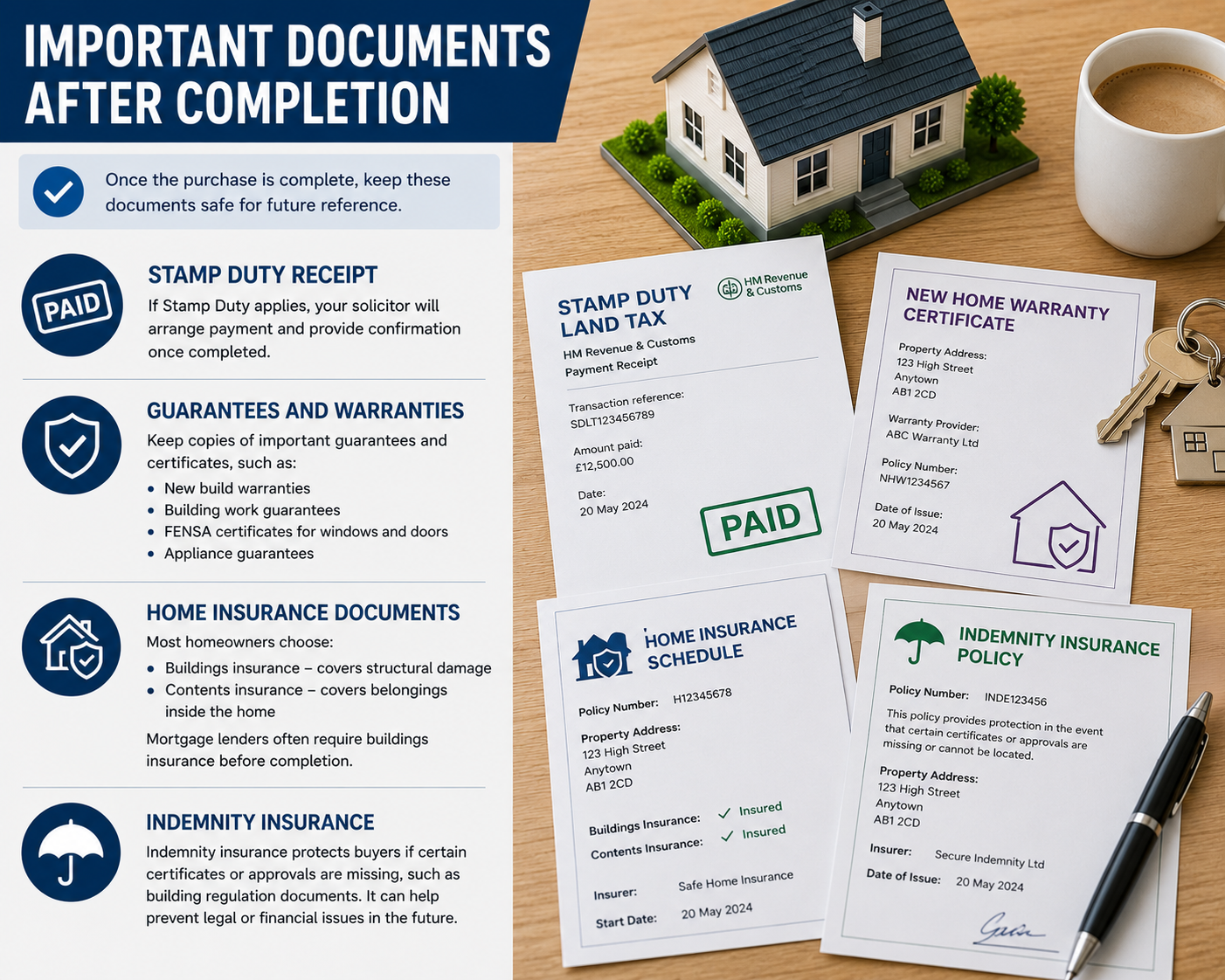
Home Insurance Documents
Most homeowners choose:
- Buildings insurance – Covers structural damage
- Contents insurance – Covers belongings inside the home
Mortgage lenders often require buildings insurance before completion.
Indemnity Insurance
Indemnity insurance protects buyers if certain certificates or approvals are missing, such as building regulation documents. It can help prevent legal or financial issues in the future.
Final Thoughts
Having the correct house purchase documents ready can make buying a home in the UK far simpler and less stressful. From mortgage paperwork to surveys and legal certificates, staying organised throughout the process helps ensure a quicker and smoother move into your new home.